
Disclaimer: This post may contain affiliate links. As an Amazon Associate, we earn from qualifying purchases.
Scooping the litter box shouldn’t be the most frustrating part of having a cat, but the wrong cat litter scoop can make it feel that way. Handles snap when the scoop is full, small clumps slip through the slots, and sticky waste gets stuck to the surface instead of dropping cleanly.
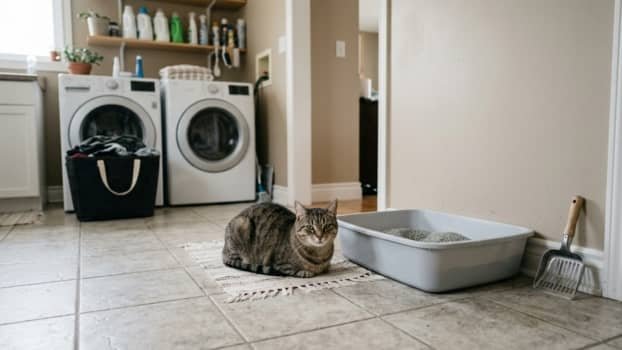
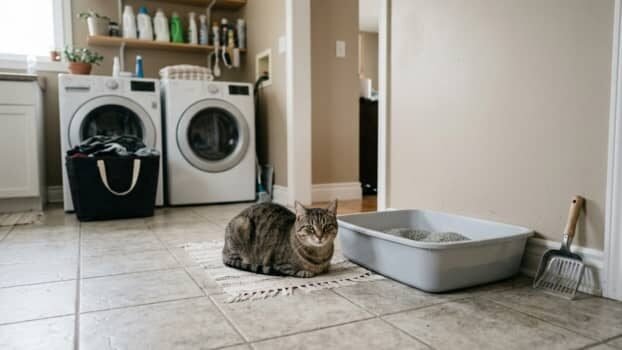
A clean litter box setup with a cat and scoop in a laundry room
A well-designed cat litter scoop makes those problems disappear. The right slot size keeps clumps intact, a sturdy build doesn’t bend under pressure, and a good shape lets you clean the box quickly without making a mess.
This guide walks through how to choose the right cat litter scoop, what actually matters when you’re using it every day, and a few solid options that make cleaning easier.
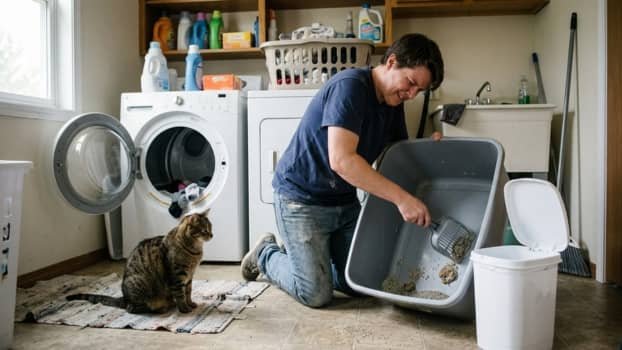
Scooping can feel frustrating when clumps stick and don’t lift cleanly
How to Choose the Right Cat Litter Scoop
The best cat litter scoop is a sturdy scoop with the right slot size for your litter, so clumps stay intact while clean litter falls through easily. The difference between a scoop that works and one that frustrates you usually comes down to a few small details.
| Litter Type | Best Scoop Type | Why It Works |
|---|---|---|
| Clumping Clay | Fine-slot metal scoop | Keeps clumps intact and prevents small pieces from falling through |
| Pellet / Wood | Wide-slot scoop | Allows pellets to fall through quickly without clogging |
| Crystal | Medium-slot scoop | Balances speed and control while keeping waste separated |
Slot size has the biggest impact on how well a scoop performs. Fine slots hold onto small clumps, which works better for clumping clay litter. Wider slots move faster but tend to let smaller pieces fall through, which can make the box feel less clean after scooping.
Material also affects how the scoop feels in daily use. Metal holds its shape better under pressure, while plastic is lighter but wears out faster.
The shape of the scoop affects how much you can pick up at once. A deeper shovel holds more waste and keeps it from spilling over the sides, while flatter designs give you more control for precise scooping.
Handle design is easy to overlook, but it matters if you’re cleaning every day. A comfortable grip or longer handle reduces strain on your wrist and makes the process feel quicker, especially with larger litter boxes.
Metal vs Plastic Cat Litter Scoop
Choosing between a metal or plastic cat litter scoop comes down to how much effort it takes to clean the box each day.
Metal scoops stay rigid when you’re dealing with heavy or stuck clumps. You can press down, scrape the bottom, and lift everything out without the scoop bending. That makes a noticeable difference if waste tends to stick or break apart while you’re scooping.
Plastic scoops feel lighter in your hand and are easier to move quickly through the litter. They work fine at first, but over time the material starts to weaken. Small cracks can form near the handle or along the base, and that’s usually when the scoop eventually snaps while you’re lifting a full load.
If scooping feels slow or frustrating, switching to a metal cat litter scoop usually makes the process smoother. Plastic still works for simple setups, but it tends to wear out faster with regular use. Spending a bit more on a sturdy scoop upfront usually means you won’t have to replace it every few months.
How to Match Your Cat Litter Scoop to Your Litter
Not every cat litter scoop works well with every type of litter. The slot size and spacing need to match what you’re using, or scooping quickly turns into a frustrating routine.
If the openings are too small, litter gets stuck and slows you down. If they’re too wide, smaller clumps fall through and the box never feels fully clean. Getting this one detail right makes a noticeable difference in how fast and clean each scoop feels.
Clumping Clay Litter
Clumping clay litter works best with a cat litter scoop that has tight, consistent slots. Smaller openings keep clumps intact and prevent small pieces from falling back into the box.
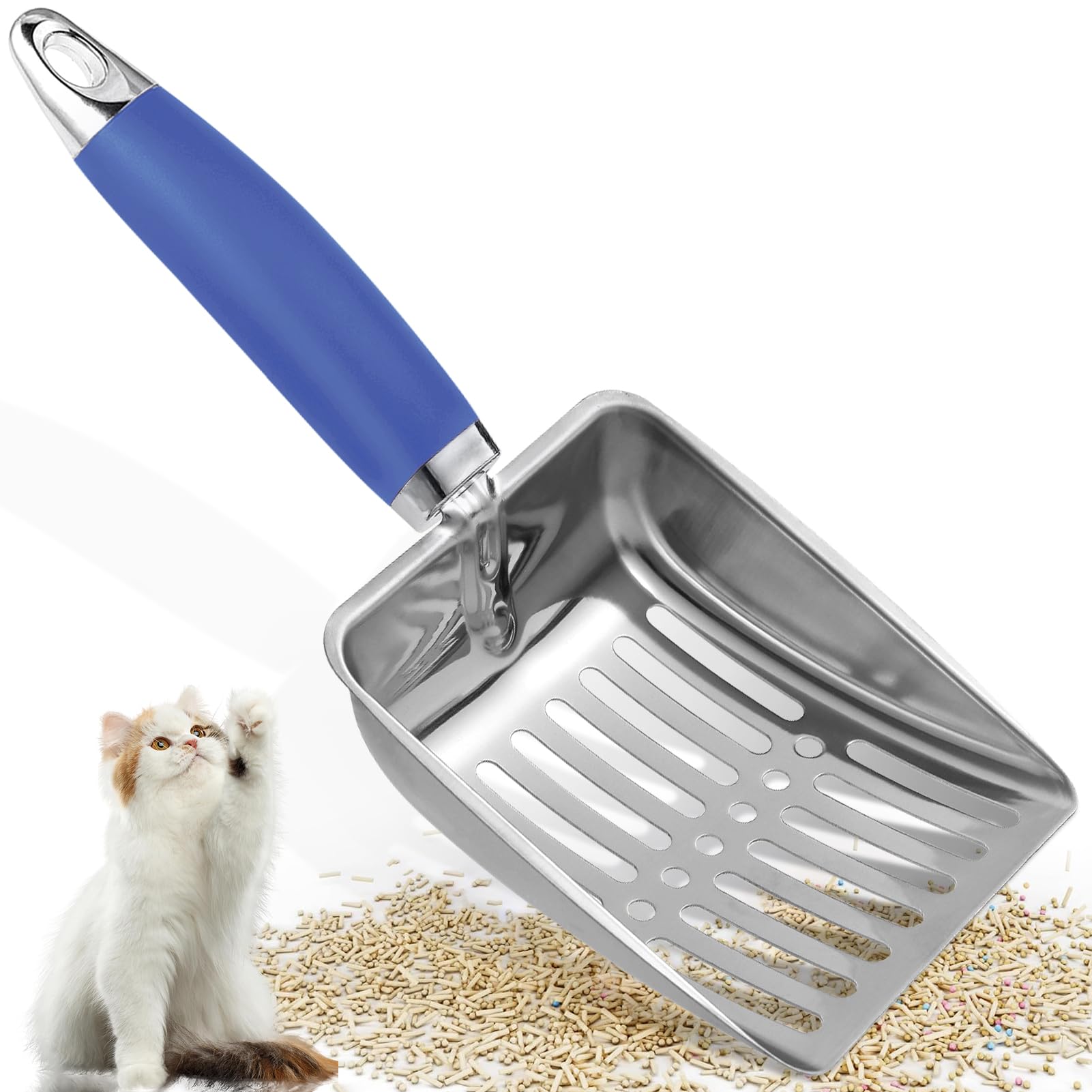
A sturdy metal scoop like the iPrimio metal litter scoop works well here because it stays rigid when scraping stuck clumps and keeps everything together as you lift. For finer cleanup, a mesh-style scoop like the Apidgrowth metal litter scoop can catch smaller pieces that standard slots sometimes miss.
Wider slots tend to leave behind smaller pieces, which makes the box feel less clean. That’s why tighter spacing makes such a noticeable difference with clumping litter.
Pellet and Wood Litter
Pellet and wood litters need a different type of cat litter scoop than clumping litter. Instead of tight slots, you need wider gaps so the pellets can fall through quickly without getting stuck.

Scoops with wider spacing move much faster through this type of litter. A design like the UFECODO metal scoop, with larger slots and a deeper shovel, lets clean pellets drop through while holding onto waste.
If you try to use a fine-slot scoop with pellets, it clogs almost immediately and slows everything down. Wider slots keep things moving and make scooping feel quick again.
Crystal Litter
Crystal litter works best with a cat litter scoop that has medium-sized slots. The openings need to be large enough for the crystals to fall through easily, but not so wide that waste slips through.
A simple scoop like the Petmate plastic litter scoop works well here, especially for lighter, free-flowing litter like crystals.
Very fine slots tend to slow things down with crystal litter, while wide gaps can let waste fall through. A balanced, medium-slot design keeps everything working the way it should.
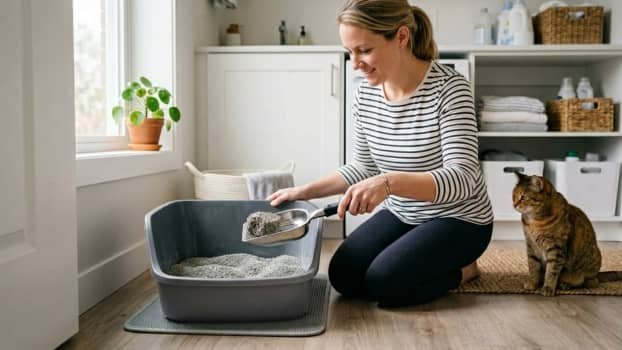
A sturdy scoop makes lifting clumps quick and easy
What Makes a Cat Litter Scoop Easier to Use
A cat litter scoop might seem simple, but small design details can make a noticeable difference when you’re using it every day.
A comfortable handle makes scooping feel more controlled, especially if you’re cleaning the box more than once a day. Handles with a bit of grip or a thicker shape are easier on your hand and reduce strain.
Scoop depth also matters. A deeper scoop holds more litter at once, which means fewer passes and less time spent cleaning. Shallow scoops tend to spill or require extra scooping to finish the job.
The angle of the scoop plays a role too. A slightly angled front edge makes it easier to slide under clumps without pushing too hard, especially when they’re stuck to the bottom of the box.
These small details don’t seem like much at first, but they can make your daily routine feel faster and a lot less frustrating.
Common Problems with a Cat Litter Scoop
If scooping feels slow or messy, the scoop is usually the problem.
One common issue is leftover debris after scooping. This usually comes down to slot spacing that doesn’t match the litter.
Another problem is bending or breaking. Lightweight plastic scoops can crack or snap over time, especially when dealing with heavier clumps.
Litter sticking to the scoop is also frustrating. Rough surfaces or certain materials can cause wet litter to cling, which makes cleanup slower and messier.
Some scoops are simply too flat or too small. They don’t hold enough litter, which means you end up making more passes than necessary.
Fixing these problems usually comes down to choosing a cat litter scoop that matches your litter type and feels solid in your hand.
When to Replace Your Cat Litter Scoop
Even a good cat litter scoop eventually wears out.
If it starts bending, cracking, or letting clumps fall back into the box, it’s time to replace it. Worn edges and misshaped slots also make scooping slower and less clean.
Replacing it early keeps your routine quick and avoids ending up without a scoop when it finally breaks.
Frequently Asked Questions
What is the best cat litter scoop?
The best cat litter scoop is one that matches your litter type and doesn’t bend or let clumps fall through. A sturdy scoop with the right slot size makes daily cleaning faster and keeps the box cleaner.
Are metal cat litter scoops better than plastic?
Metal cat litter scoops are usually more durable and better for heavy or stuck clumps. Plastic scoops are lighter and cheaper, but they tend to wear out faster with regular use.
What cat litter scoop works best for clumping litter?
A cat litter scoop with fine slots works best for clumping litter. Smaller openings help hold clumps together and prevent small pieces from falling back into the box.
How often should you scoop a litter box?
Most litter boxes should be scooped at least once a day. Regular scooping helps control odor and keeps the litter box cleaner between full changes.
Why does litter stick to my scoop?
Litter usually sticks when the surface is rough or the scoop isn’t suited for your litter type. Switching to a smoother or non-stick cat litter scoop can help reduce buildup.
Final Thoughts
Choosing the right cat litter scoop comes down to a few simple things: matching the slot size to your litter, picking a sturdy build that won’t bend or crack, and finding a shape that makes scooping feel easy instead of frustrating.
Those small details make a bigger difference than you’d expect. A scoop that sifts cleanly and feels comfortable to use can turn a daily chore into something quick and manageable.
It also helps to look at your setup as a whole. A few simple upgrades around the litter box can make cleaning even easier. Take a look at our guide to litter box accessories for more ideas.
