Disclaimer: This post may contain affiliate links. As an Amazon Associate, we earn from qualifying purchases.
Last updated on June 28, 2026
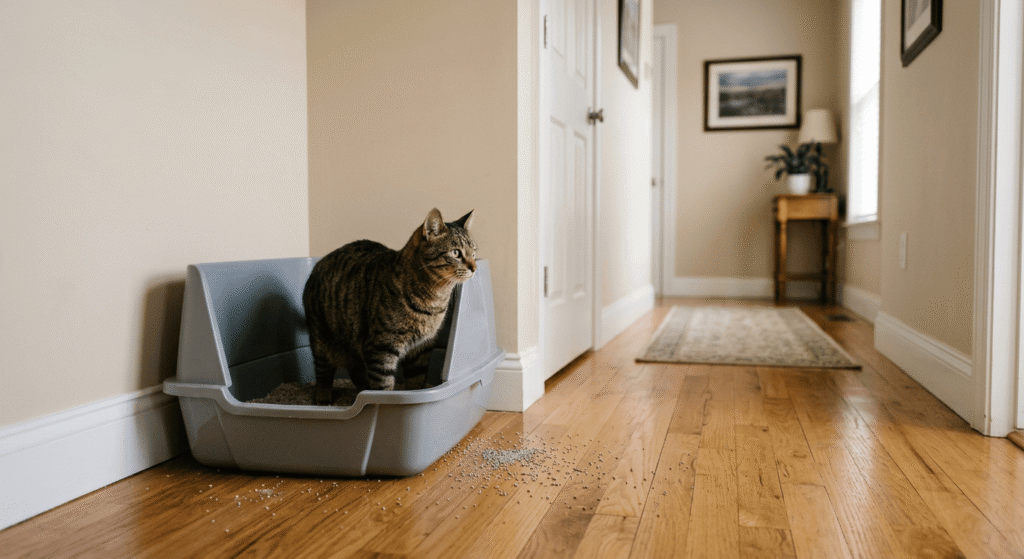
Cat spray is one of the hardest litter box problems to deal with. It’s not just a small miss over the edge. It ends up on walls, behind the box, and sometimes even underneath it. You clean everything, and then it happens again the next day.
The frustrating part is that most litter boxes don’t actually solve the problem. High sides help a little, but they don’t stop a cat that sprays upward. Covered boxes seem like the answer, but many of them leak at the seams where the top meets the base.
The best litter box for cats that spray is one that either fully contains the spray or eliminates weak points, such as seams, gaps, and low walls, where urine can escape.
There’s also an important difference that gets overlooked. Some cats simply pee high because of posture. Others are actually spraying, which is a different behavior entirely. The setup that works for one doesn’t always work for the other.
In this guide, we’ll go through litter boxes that actually work for spraying cats, why most boxes fail, and how to set things up so you’re not constantly cleaning walls and floors.

Quick Picks: Best Litter Boxes for Cats That Spray
If you’re dealing with spray on walls or behind the box, these are the setups that actually solve the problem. Each one handles a different situation, depending on how your cat behaves.
- Best Overall (Full Containment): WoofiGo Enclosed Stainless Steel Litter Box
- Best Top-Entry Option: IRIS USA Top Entry Litter Box
- Best Open High-Sided Box: SpaceTime Extra Large High-Sided Litter Box
- Best for Large Cats: Gefryco Extra Large High-Sided Litter Box
- Best Flexible Enclosed Option: KISENG Stainless Steel Enclosed Litter Box
- Best Budget Option: Amazon Basics High-Sided Litter Box
If your cat sprays directly onto walls or over the back of the box, start with a fully enclosed or top-entry design. If your cat refuses enclosed spaces, a seamless high-sided box is usually the next best option.
Best Litter Boxes for Cats That Spray
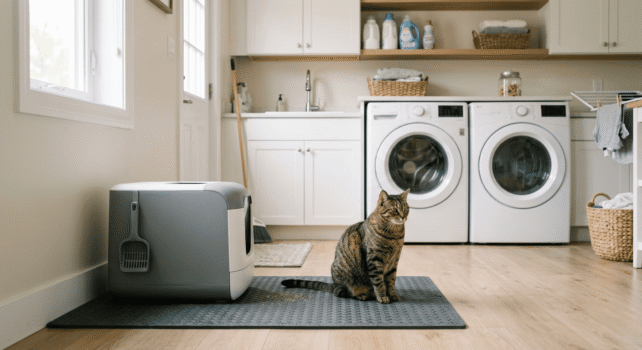
SpaceTime Extra Large High-Sided Litter Box
This is one of the simplest setups that actually works for spray problems.
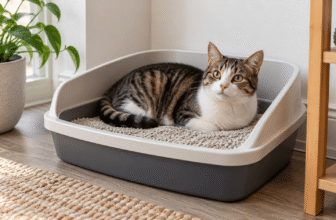
The biggest advantage here is the one-piece design. There’s no seam, no clip-on wall, nothing for urine to leak through. That matters more than anything else with a spraying cat.
The 13.98-inch height gives you real containment, not just a slightly taller pan.
Why this one works: seamless walls stop hidden leaks completely.
Best for: cats that spray high but refuse enclosed boxes.
Gefryco Extra Large High-Sided Litter Box
This one is all about space and height working together.
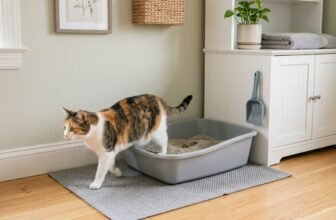
At over 24 inches long, it gives cats room to turn and position themselves properly. That alone reduces a lot of edge spraying. The high walls help catch anything that would normally go over.
Why this one works: large footprint prevents awkward positioning that leads to spray.
Best for: big cats and cats that back up to the edge.
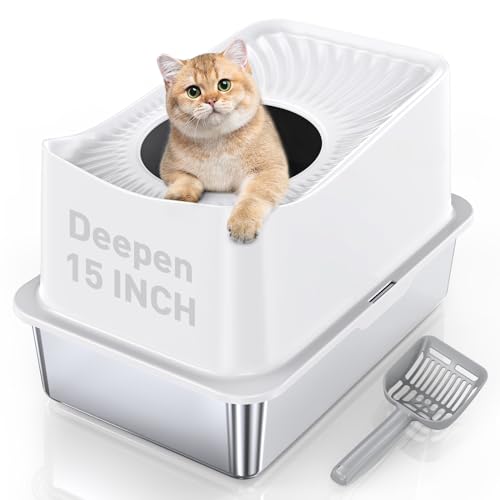
IRIS USA Top Entry Litter Box
This solves the problem differently than most boxes.
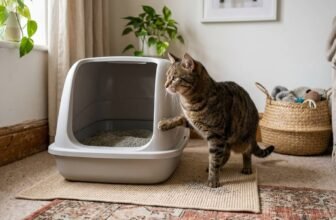
Instead of trying to block spray, it forces the cat into a position where spraying outward becomes almost impossible. The vertical entry changes the angle completely.
Why this one works: it redirects behavior instead of containing it.
Best for: agile cats that already jump comfortably.
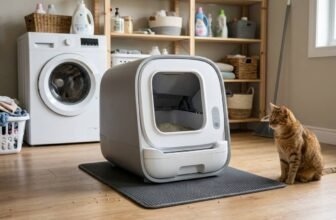
WoofiGo Enclosed Stainless Steel Litter Box
This is a full containment setup for serious spraying.
The stainless steel base won’t absorb odor, and the enclosed walls stop spray from escaping. It’s a big upgrade from plastic hooded boxes that start to smell after a few months.
Why this one works: combines odor control and spray containment.
Best for: strong sprayers and multi-cat homes.
KISENG Stainless Steel Enclosed Litter Box
This one stands out because of how flexible it is.
You can run it fully enclosed, semi-enclosed, or open. That makes it easier to transition a cat that doesn’t like covered boxes.
Why this one works: adaptable design lets you match your cat instead of forcing it.
Best for: picky cats that reject new setups.
Lobeve Stainless Steel Enclosed Litter Box
This is designed for long-term use.
The large enclosed structure handles both spray and odor, and the dual entry option helps with cats that prefer different access points.
Why this one works: high walls plus enclosed structure contain everything inside.
Best for: large cats and heavy sprayers.
Tevila Stainless Steel Enclosed Litter Box
This is one of the most complete setups in one package.
It includes high walls, enclosed design, and added features like a step and mat, which help reduce tracking around the box.
Why this one works: full containment system designed for messy cats.
Best for: homes dealing with both spray and litter tracking.
Amazon Basics High-Sided Litter Box
This is the entry-level upgrade from a basic litter pan.
The higher sides help with minor spray issues, but it won’t stop a determined high sprayer.
Why this one works: simple and affordable improvement.
Where it falls short: not tall enough for serious spraying.
Best for: mild cases or temporary fixes.
Petmate Covered Litter Box
This one is included as a warning, not a recommendation.
The seam between the lid and base is exactly where spray tends to hit. Once urine gets into that gap, it leaks out and creates a hidden mess underneath.
Why it fails: the seam becomes a leak point.
Best for: cats that don’t spray high.
Why Most Litter Boxes Fail for Cats That Spray

Most litter boxes are not designed for spraying cats. They’re designed for cats that squat and pee downward. That’s why the problem keeps happening even after switching boxes.
There are a few common design issues that show up again and again.
The Seam Problem Most People Don’t Notice
A lot of covered litter boxes and high-sided designs use a two-piece setup. The top snaps onto the bottom, or a rim sits on top of the base.
That connection point creates a seam right in the middle of the box.
When a cat sprays, the urine often hits that exact area. Instead of staying inside, it seeps through the seam and runs down the outside of the box. Sometimes it ends up pooling underneath, which is why the floor smells even after cleaning.
This is one of the biggest reasons people think their litter box “isn’t working.” The problem isn’t the idea of a covered box. It’s the way it’s built.
High Sides Alone Aren’t Always Enough

High-sided litter boxes are often recommended, but they only solve part of the problem.
If a cat sprays upward or horizontally, even a 10–12 inch wall might not be enough. The urine can still go over the edge or hit a weak point near the top.
This is why some people upgrade to a “high-sided” box and still end up cleaning the wall behind it.
Covered Boxes Can Make Things Worse
Covered litter boxes seem like the obvious fix, but they don’t always work the way people expect.
If the lid doesn’t seal tightly to the base, spray can leak through the connection points. In some designs, there are also small gaps or handle openings near the top where urine can escape.
There’s also the behavior side. Some cats feel trapped in enclosed spaces and may start avoiding the box or positioning themselves awkwardly, which makes the problem worse instead of better.
Automatic Litter Boxes Aren’t Built for Spray
Self-cleaning litter boxes are often suggested as a premium solution, but they’re not designed for spraying behavior.
If a cat sprays against the inner walls of a rotating or enclosed system, the urine ends up outside the litter area. Over time, that builds up in places that are difficult to clean and can create strong odors.
They work well for scooping, but they don’t solve the actual spray direction problem.
What Actually Works Instead
The designs that work tend to follow a few simple rules.
- Walls that are tall enough to contain vertical spray
- No exposed seams or weak connection points
- Enough space for the cat to turn and position properly
- A layout that either contains spray or changes how the cat uses the box
That’s why options like top-entry boxes, fully enclosed designs with tight construction, and seamless high-sided boxes tend to perform better in real situations.
It’s less about finding a “fancy” litter box and more about avoiding the design flaws that let urine escape in the first place.
Spraying vs High Peeing: What’s Actually Happening
Not all “missing the litter box” problems are the same. A cat that pees high and a cat that sprays are doing two completely different things, even though the result looks similar.
If you don’t know which one you’re dealing with, it’s easy to end up with the wrong litter box setup.
What Spraying Looks Like
Spraying is a marking behavior. The cat usually stands upright, often with the tail raised or slightly quivering, and releases a small amount of urine onto a vertical surface.
This can happen on the wall behind the litter box, the inside of the box, or even nearby surfaces.
Because the urine is directed outward instead of downward, it easily escapes standard litter boxes.
Key signs of spraying:
- Cat stands up instead of squatting
- Urine hits walls or vertical surfaces
- Smaller amounts of urine
- Happens even when the box is clean
What High Peeing Looks Like
High peeing is different. The cat is still trying to use the litter box normally, but the angle or posture causes the urine to go over the edge. This often overlaps with posture-related issues, especially in cats that raise their rear while urinating.
In those cases, it helps to look at setups designed specifically for that behavior, like those covered in our guide to litter boxes for cats that pee standing up.
This often happens when a cat backs up too far, doesn’t fully crouch, or simply aims higher than the box can handle.
Key signs of high peeing:
- Cat squats but urine goes over the edge
- Usually happens at the back or sides of the box
- Larger puddles compared to spraying
- Often tied to box size or shape
Why This Difference Matters
The solution depends on which behavior you’re dealing with.
High peeing is usually solved with a bigger box or higher walls. Spraying is harder to contain because the urine is directed outward on purpose.
That’s why spraying often requires a completely different setup, like a fully enclosed box or a top-entry design.
If your cat is spraying, simply switching to a slightly taller litter box usually won’t fix the problem. The design has to either contain the spray or change how the cat positions itself inside the box.
Once you understand the difference, it becomes much easier to choose a litter box that actually solves the issue instead of just reducing the mess slightly.
How to Set Up a Litter Box for a Spraying Cat (What Actually Works)
Fixing spray problems isn’t just about picking the right litter box. The setup matters just as much. Even a good box can fail if it’s placed or used the wrong way.
These are the changes that make the biggest difference in real situations.
Start With the Right Type of Box
If your cat sprays upward or directly at the back wall, you need either full containment or a design that changes how your cat positions itself.
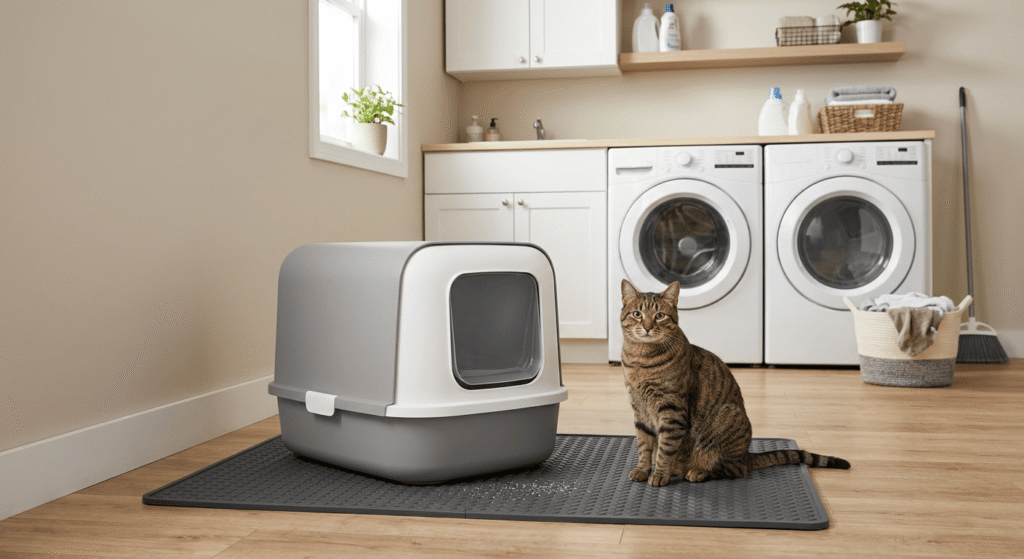
That’s where something like the WoofiGo Enclosed Stainless Steel Litter Box makes a difference. The enclosed walls keep everything inside, and the structure reduces the chance of leaks.
If your cat doesn’t tolerate enclosed spaces, a seamless open box like the SpaceTime Extra Large High-Sided Litter Box is usually the next best option. It won’t fully contain spray, but it removes the seam problem and gives you more vertical coverage.
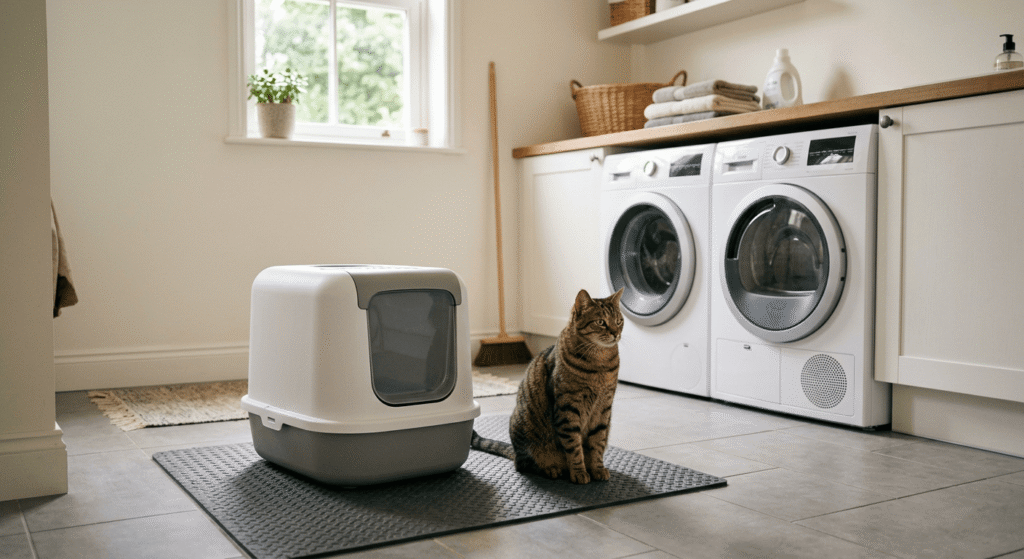
For cats that are comfortable jumping, a top-entry setup like the IRIS USA Top Entry Litter Box can completely stop outward spray by forcing a downward angle.
Give Your Cat More Space Than You Think
A cramped litter box makes spraying worse. When a cat can’t turn or position properly, it often ends up aiming toward the edges.
That’s why larger boxes, like the Gefryco Extra Large High-Sided Litter Box, tend to reduce spray even without full enclosure. More space gives the cat better control over where it goes.
Protect the Area Around the Box
Even with a good setup, it helps to have a backup plan.
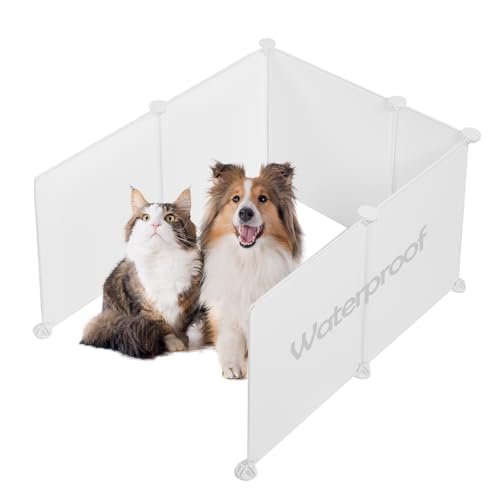
Placing a waterproof mat under the box catches anything that escapes. For cats that spray high, adding a simple barrier behind the box can prevent damage to walls and baseboards.
Some setups use a plastic panel or even a discreet splash guard behind the litter box. This is especially useful while you’re testing different box styles.
Adjust the Litter Placement
Where the litter sits inside the box can change how your cat uses it.
Keeping slightly deeper litter toward the back can encourage the cat to aim into the box instead of toward the wall. It’s a small adjustment, but it can help reduce spray direction issues.
Keep the Box Extremely Clean
Spraying isn’t always about the box itself. Sometimes it’s a reaction to smell.
If the litter box isn’t cleaned often enough, some cats will stand higher or avoid stepping fully inside, which makes spray more likely.
Cleaning more frequently and using an unscented litter can reduce that behavior.
When the Box Alone Isn’t Enough
If your cat suddenly starts spraying, or the behavior gets worse over time, it’s worth looking beyond the litter box.
Stress, territory issues, or discomfort can all cause spraying behavior. In those cases, the litter box helps manage the mess, but it doesn’t address the root cause.
That’s why combining the right litter box setup with a stable, low-stress environment usually gives the best results.
Common Mistakes That Make Spraying Worse
When a cat starts spraying, it’s easy to focus only on cleaning the mess. But some of the most common fixes actually make the problem worse without people realizing it.
These are the mistakes that tend to keep the cycle going.
Switching to a Covered Box Too Quickly
A covered litter box seems like the obvious solution, but it doesn’t always work the way people expect.
If the design has gaps or a loose-fitting lid, spray can still escape. Even worse, some cats feel trapped inside enclosed spaces and start positioning themselves awkwardly, which leads to more mess.
That’s why something like the Petmate Covered Litter Box can be hit or miss. It works for some cats, but for strong sprayers, the seam and structure can still allow leaks.
Using a Box That’s Too Small
Size gets overlooked all the time.
If the box is too short or too narrow, the cat ends up too close to the edge. That makes it much easier for urine to go over the side or hit the back wall.
Upgrading to something larger, like the Gefryco Extra Large High-Sided Litter Box, often reduces the problem simply because the cat has room to position properly.
Relying Only on “High Sides”
High sides help, but they’re not a complete solution.
If a cat sprays upward, the direction of the urine matters more than the height of the wall. That’s why some people upgrade to a taller box and still find spray on the wall behind it.
In those cases, a different approach, like a top-entry box such as the IRIS USA Top Entry Litter Box, or a fully enclosed design, usually works better.
Ignoring Where the Spray Is Actually Going
Not all spray problems look the same.
Some cats aim directly at the back wall. Others spray slightly to the side or just over the edge. If you don’t pay attention to where the urine is landing, it’s easy to choose the wrong type of box.
Watching your cat once or twice can give you a much clearer idea of what kind of containment you actually need.
Cleaning With the Wrong Products
Regular cleaners don’t fully remove the smell of cat urine. If the scent stays behind, the cat may return to the same spot and repeat the behavior. That’s why following a proper cleaning routine for a litter box makes a big difference, especially for spray problems where odor builds up quickly.
If the scent stays behind, the cat may return to the same spot and repeat the behavior. That’s why enzymatic cleaners are usually more effective for this kind of problem.
Expecting the Litter Box Alone to Fix Everything
A better litter box helps control the mess, but it doesn’t always fix the behavior.
Spraying can be triggered by stress, territory issues, or changes in the environment. If those factors aren’t addressed, the behavior can continue even with a better setup.
That’s why the most effective approach combines the right litter box, a clean environment, and a stable routine.
FAQ: Litter Boxes for Cats That Spray
What is the best litter box for a cat that sprays?
The best litter box for a cat that sprays is one that either fully contains the spray or removes weak points where urine can escape. Fully enclosed boxes like the WoofiGo Enclosed Stainless Steel Litter Box or top-entry designs like the IRIS USA Top Entry Litter Box are usually the most effective options.
Do high-sided litter boxes stop spraying?
High-sided litter boxes can help, but they don’t always stop spraying completely. If a cat sprays upward or horizontally, urine can still go over the edge. In those cases, a fully enclosed or top-entry box works better than height alone.
Why does my cat spray even inside the litter box?
Spraying inside the litter box usually happens because of posture, stress, or territory issues. Some cats stand upright and direct urine outward, which causes it to hit the sides or escape the box. The litter box may still be used correctly, but the design doesn’t contain the spray.
Are covered litter boxes good for spraying cats?
Some covered litter boxes help, but many have seams where the lid connects to the base. If a cat sprays directly at that seam, urine can leak out. That’s why tightly fitted enclosed designs or seamless setups tend to work better.
Can a litter box fix spraying completely?
A better litter box can contain the mess, but it doesn’t always stop the behavior. If spraying is caused by stress, medical issues, or territory problems, those need to be addressed as well. The litter box helps manage the situation, but it’s only part of the solution.
Related Litter Box Problems (And Solutions)
Best Litter Box for Cats That Pee Over the Edge
Best Litter Box for Cats That Spray
Best Litter Box for Cats That Pee Standing Up
Best Litter Box for Senior Cats
Spraying is one of the most frustrating litter box problems because it spreads beyond the box itself. Cleaning the floor or the wall doesn’t fix it, and switching to a slightly better box often doesn’t help either.
The real solution is choosing a design that matches how your cat behaves.
If your cat sprays upward, you need full containment or a setup that changes the angle completely. That’s where options like the WoofiGo Enclosed Stainless Steel Litter Box or the IRIS USA Top Entry Litter Box make the biggest difference.
If your cat refuses enclosed spaces, a seamless high-sided box like the SpaceTime Extra Large High-Sided Litter Box is usually the most reliable alternative.
Once you remove the weak points like seams, low walls, and cramped space, the problem becomes much easier to manage.
It’s not about finding a perfect litter box. It’s about removing the reasons the mess keeps happening.