Disclaimer: This post may contain affiliate links. As an Amazon Associate, we earn from qualifying purchases.
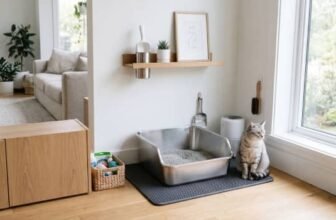
A stainless steel litter box is a popular alternative to traditional plastic boxes, especially when odors start to linger or the pan no longer feels fully clean.
Plastic litter boxes work well at first, but daily use wears them down. Scratches build up from digging and scooping, and those small grooves trap odor and bacteria. At that point, even a freshly cleaned box can still smell.
That’s where stainless steel stands out. The smooth surface doesn’t absorb odor or scratch easily, so the box stays cleaner and is much easier to keep fresh over time.
If you’re curious what these look like, you can see a few popular stainless steel litter boxes here:
View stainless steel litter boxes on Amazon.
Stainless steel litter boxes aren’t the right fit for every situation. They usually cost more upfront, and some cats may need a little time to adjust to a different type of box.
This guide walks through the pros, cons, and practical things to know about a stainless steel litter box, so you can decide whether switching from plastic makes sense.
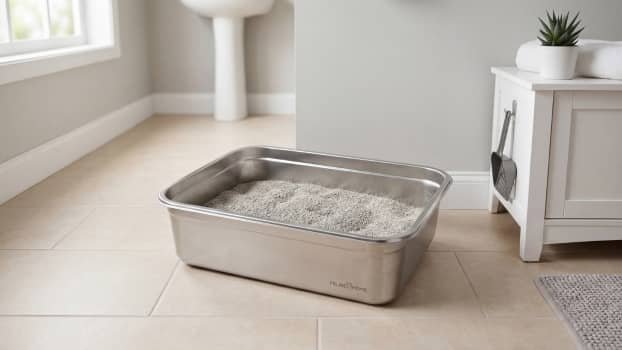
A stainless steel litter box can help reduce odor and make litter box cleaning easier.
Why Many Cat Owners Start Looking for a Stainless Steel Litter Box
A lot of people start with a basic plastic litter box. It’s inexpensive, easy to find, and it gets the job done.
For a while, everything works fine. Then small issues start creeping in.
The first thing people usually notice is odor. Even with regular scooping and washing, some plastic litter boxes begin to smell over time. The box might look clean, but the scent never quite disappears.
Scratches are part of the problem. Cats dig and cover their waste every time they use the litter box, and those movements slowly leave tiny grooves in the plastic. Over time, those scratches can trap moisture, residue, and bacteria.
Once the surface starts wearing down, the box simply becomes harder to keep fresh.
That’s often the moment when people start looking for alternatives, and the stainless steel litter box starts coming up as a possible upgrade.
What Makes Stainless Steel Litter Boxes Different
A stainless steel litter box looks very similar to a plastic one. It’s still a simple pan that holds litter and serves the same basic purpose.
The real difference comes from the material. Stainless steel doesn’t absorb odor, resists scratching, and stays easier to clean than plastic over time.
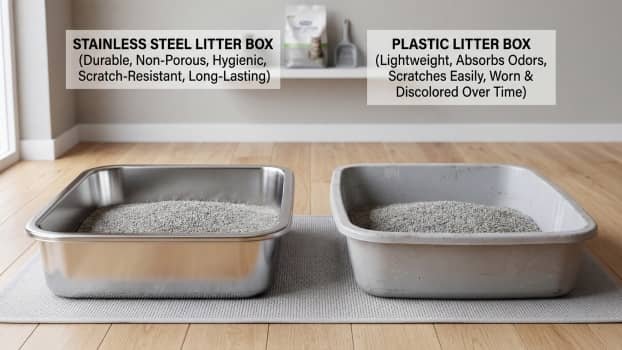
Stainless steel litter boxes have a smooth non-porous surface, while plastic litter boxes can absorb odor and develop scratches over time.
Plastic Surfaces Can Wear Down Over Time
Cats naturally dig and cover their waste in the litter box. Over time this can leave small scratches in plastic litter boxes.
Those scratches create tiny grooves where residue and bacteria can collect, which makes the box harder to clean.
Stainless steel is far more resistant to scratching, so the surface usually stays smooth even after long-term use.
Cleaning Is Usually Easier
Another benefit of a stainless steel litter box is how easy it is to clean. The smooth metal surface doesn’t trap residue the way worn plastic can, so most messes rinse away quickly. Over time, that can make routine litter box maintenance faster and less frustrating.
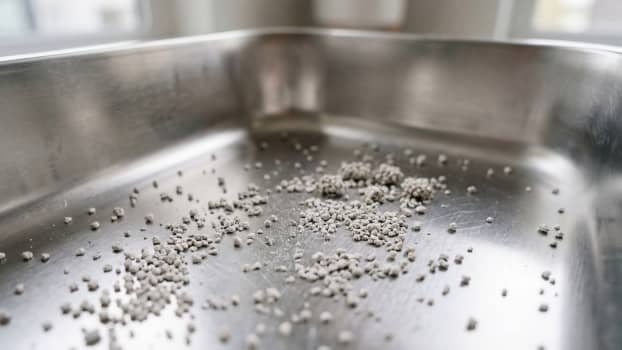
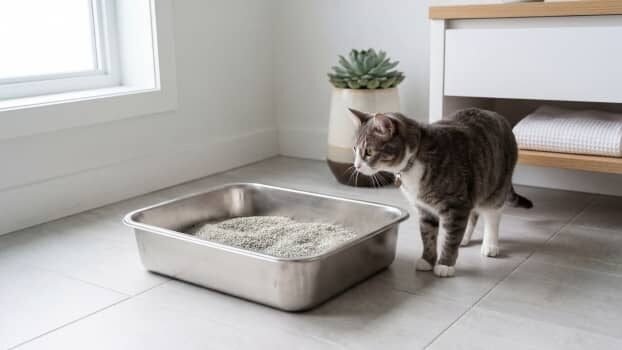
The smooth non-porous surface of a stainless steel litter box helps prevent waste and odor from sticking.
Pros of a Stainless Steel Litter Box
The biggest advantage of a stainless steel litter box is how well it holds up over time. Unlike plastic boxes that eventually wear down, stainless steel tends to stay in good condition for years with normal use.
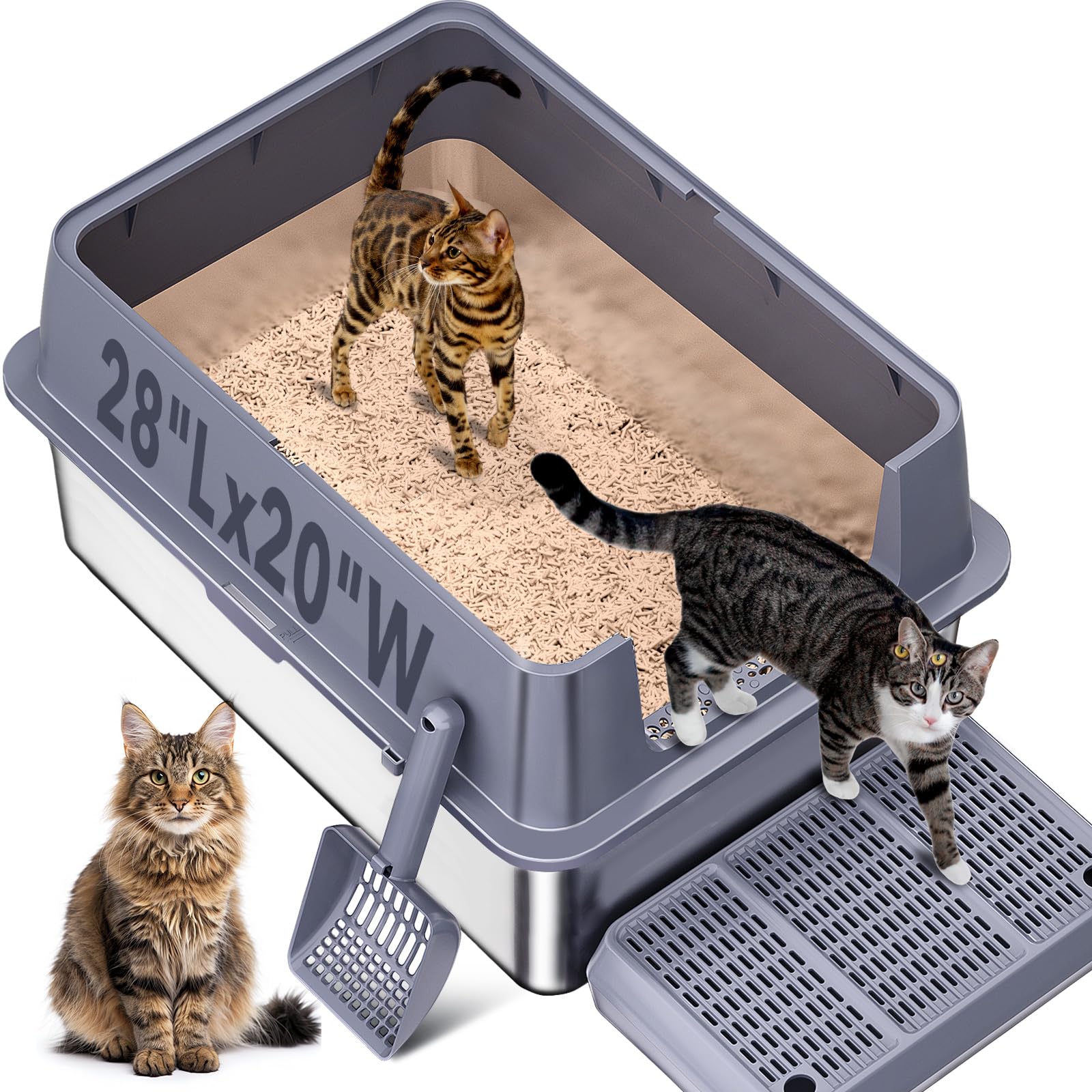
Durable models like this extra large stainless steel litter box are popular because the metal surface resists scratching and doesn’t hold onto odor the way plastic can.
Here are some of the main benefits people notice after making the switch.
Better Odor Control
Because stainless steel is non-porous, it doesn’t absorb moisture or odor. Smells are more likely to stay in the litter rather than lingering in the box itself.
Long-Term Durability
Stainless steel is much harder than plastic, so it resists scratches, stains, and warping. With normal use, a stainless steel litter box can last for many years.
Easier Cleaning
Waste and litter dust tend to rinse off quickly from the smooth metal surface, which can make routine cleaning faster and simpler.
A More Hygienic Surface
Since stainless steel doesn’t trap bacteria the way worn plastic can, the litter box area is often easier to keep sanitary.
Cons of Stainless Steel Litter Boxes
A stainless steel litter box has several advantages, but it isn’t always the right choice for every situation. There are a few things to consider before making the switch.
Higher Upfront Cost
The most noticeable difference is the price. Stainless steel litter boxes usually cost more than standard plastic pans.
However, they often last much longer. While plastic litter boxes may need replacing once they begin to wear down, a stainless steel box can remain in good condition for years.
Fewer Design Options
Plastic litter boxes come in almost every style imaginable — covered boxes, corner boxes, top-entry designs, and large high-sided models.
Stainless steel options are improving, but the variety is still smaller. Many models are simple open pans, which may not work as well for cats that kick litter or prefer more privacy.
Some Cats Need a Short Adjustment Period
Most cats adapt quickly to a stainless steel litter box, especially if the litter itself stays the same. However, some cats are sensitive to changes in their environment.
Setting the new box beside the old one for a few days often helps make the transition easier.
Noise Can Be Slightly Different
One small difference is sound. When a cat digs or scratches in a metal litter box, it can produce a faint scraping noise that plastic boxes don’t make.
For most cats this isn’t an issue, but it can be noticeable in very quiet homes.
When Switching to a Stainless Steel Litter Box Makes the Most Sense
A stainless steel litter box tends to work especially well in certain situations. If you’ve been dealing with ongoing litter box issues, switching materials can sometimes make a bigger difference than expected.
Persistent Litter Box Odor
If you clean the litter box regularly but still notice lingering smells, the issue may actually be the box itself rather than the litter.
Over time, plastic can hold onto odor even after scrubbing. Switching to stainless steel removes that problem because the material doesn’t absorb smells.
Multiple Cats Using the Same Box
In multi-cat households, litter boxes tend to wear out faster. More use means more scratching, more moisture, and more opportunities for odor to build up.
Because stainless steel is more durable and easier to sanitize, it can hold up better under heavier use.
Frequent Litter Box Replacement
Some cat owners find themselves replacing plastic litter boxes every year or two once they begin to smell or look worn.
In those cases, investing in a stainless steel litter box can reduce the need for frequent replacements.
If You Want Easier Litter Box Cleaning
If litter box cleaning feels like a constant chore, stainless steel can make the job simpler. Waste and residue are less likely to cling to the smooth surface, which usually makes rinsing and wiping faster.
Practical Tips for Switching Litter Boxes
If you decide to try a stainless steel litter box, a gradual transition can make the change easier for your cat.
Keep the Litter the Same
Cats are usually more sensitive to litter changes than the box itself. Keeping the same litter helps avoid confusion during the transition.
Place the New Box Next to the Old One
Let your cat explore the new box at their own pace. Keeping both boxes available for a few days can make the adjustment smoother.
Choose the Right Size
Cats prefer litter boxes that are large enough to turn around and dig comfortably. A box that’s too small can lead to litter box avoidance regardless of the material.
If you have a large cat, you may also want to look at some of the best extra large litter boxes designed to give cats more space.
Maintain the Same Cleaning Routine
Cats respond well to consistency. Keeping the same scooping and cleaning schedule can help them adapt to the new box more quickly.
Features to Look for in a Stainless Steel Litter Box
If you’re considering switching to a stainless steel litter box, a few design features can make everyday use easier for both you and your cat.
While the material itself offers advantages like durability and odor resistance, the shape and layout of the box still matter.
High Sides
Cats often dig and kick litter while covering their waste. A litter box with higher sides can help keep litter contained and reduce the amount that ends up on the floor.
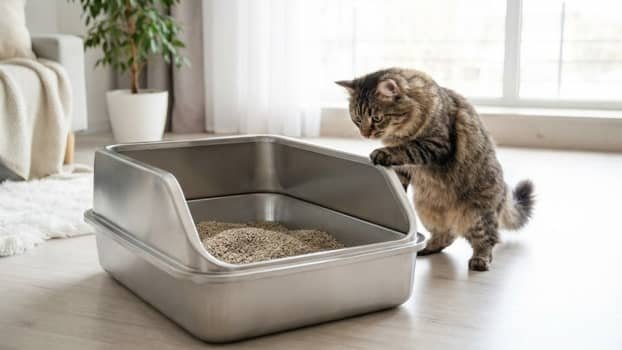
High-sided stainless steel litter boxes help contain litter for cats that dig or kick.
High-sided boxes are especially helpful for:
- enthusiastic diggers
- cats that kick litter out of the box
- situations where litter often ends up on the floor
If your cat tends to scatter litter, a high-sided stainless steel litter box can make a noticeable difference. One example is this extra-large high-sided stainless steel litter box designed to help contain litter.
Cats usually prefer litter boxes that give them enough room to turn around and dig comfortably. A box that’s too small can make litter box use less comfortable.
Larger boxes are especially helpful for:
-
bigger cat breeds
-
multi-cat homes
-
cats that prefer extra space
Smooth Rounded Corners
Rounded corners make a litter box easier to clean. Waste and litter are less likely to collect in tight seams, which makes rinsing and wiping simpler.
Anti-Slip Base
Some stainless steel litter boxes include rubber feet or anti-slip pads. These help prevent the box from sliding on tile, hardwood, or other smooth floors.
Optional High-Sided Shields or Lids
Some models include detachable side guards or lids that help contain litter and provide extra privacy.
Common Mistakes When Choosing a Litter Box
Choosing a Box That’s Too Small
Cats generally prefer a litter box that gives them enough space to turn around, dig, and cover their waste comfortably. A box that’s too small can make litter box use uncomfortable and may lead to avoidance.
Ignoring the Cat’s Habits
Different cats have different preferences, and the litter box should match those habits.
-
Cats that kick litter may benefit from higher sides.
-
Cats that spray may need extra side guards.
-
Shy cats may prefer more enclosed designs.
Changing Too Many Things at Once
When introducing a new stainless steel litter box, avoid changing the litter type at the same time. Keeping the litter the same helps cats adjust more easily to the new box.
Placing the Litter Box in the Wrong Location
Litter box location matters more than it might seem. Litter boxes should be placed in areas that are:
-
easy for the cat to access
-
quiet and low-traffic
-
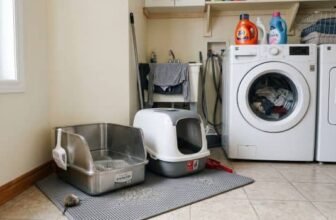
away from loud appliances like washers or dryers
Popular Stainless Steel Litter Boxes
Here are a few well-known stainless steel litter boxes that are often chosen for durability and odor resistance:
- AIPERRO Stainless Steel Litter Box
- WoofiGo Enclosed Stainless Steel Litter Box
- Tevila Extra Large Stainless Steel Litter Box
Frequently Asked Questions
Do stainless steel litter boxes smell less than plastic ones?
Often, yes. Because stainless steel is non-porous, it doesn’t absorb moisture and odor the way plastic can over time.
Are stainless steel litter boxes safe for cats?
Yes. Stainless steel is durable, hygienic, and widely used in food preparation and veterinary environments.
Do stainless steel litter boxes rust?
Most models are made from rust-resistant stainless steel, so rust is very uncommon with normal household use.
Do cats mind using a stainless steel litter box?
Most cats adjust quickly, especially if the litter inside the box stays the same.
Are stainless steel litter boxes worth it?
They can be, especially if you want a litter box that lasts longer and is easier to keep odor-free.
Final Thoughts
Switching to a stainless steel litter box can be a simple way to reduce persistent odors and improve litter box hygiene.
Plastic litter boxes are affordable and easy to find, but they tend to wear down over time. Scratches, stains, and absorbed odors can make them harder to keep fresh.
A stainless steel litter box offers a more durable alternative that stays easier to clean and maintain.
If you’re dealing with lingering litter box odors or frequently replacing worn plastic pans, switching to stainless steel may be worth considering.