
Disclaimer: This post may contain affiliate links. As an Amazon Associate, we earn from qualifying purchases.
How much litter to put in a litter box is a simple question, but it has a big impact on how clean and easy the box is to manage.
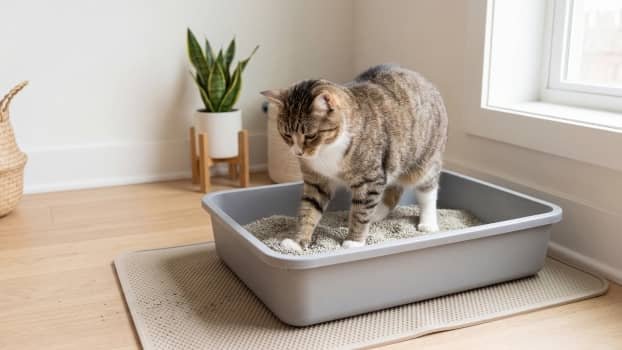
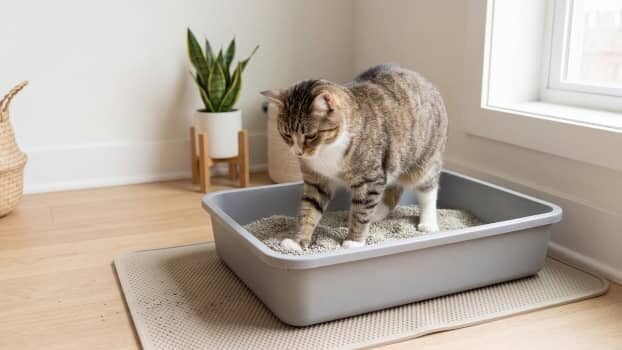
This shows how much litter should be in a litter box for proper depth and easier cleaning.
Most litter boxes work best with about 2 to 3 inches of litter. That depth gives your cat enough room to dig and cover waste while keeping urine from reaching the bottom of the box.
When the level is off, problems show up quickly. Too little litter leads to odor and stuck clumps. Too much creates extra mess and wasted litter. Getting this one detail right makes everything else easier.
How Much Litter to Put in a Litter Box
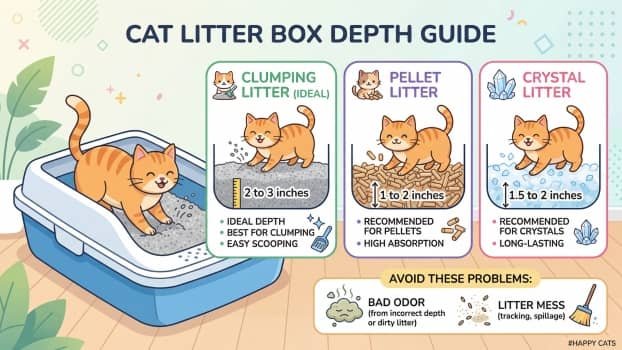
A simple guide showing how much litter to put in a litter box based on litter type and ideal depth ranges.
A good starting point is 2 to 3 inches of litter in the box. This depth helps with clumping, odor control, and makes it easier for your cat to cover waste.
You can adjust slightly depending on your setup. Go a bit deeper for heavy use and a bit shallower for certain litter types.
Why the Right Litter Depth Matters
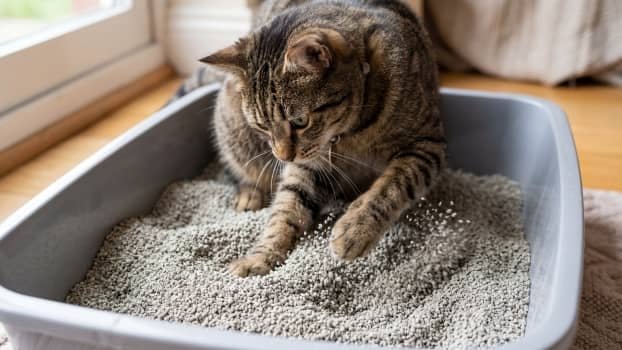
A cat digging in a litter box shows how much litter to put in a litter box for proper coverage and natural behavior.
Litter depth affects how waste is handled the moment your cat uses the box.
When the layer is deep enough, urine can sink slightly before forming a clump. This keeps moisture away from the bottom of the box and makes scooping cleaner and easier. It also gives your cat enough litter to properly cover waste, which helps reduce odor.
With a shallow layer, urine spreads out and hits the base of the box before it can clump. That is when you start seeing sticky buildup and stronger smells, even if you are scooping regularly.
Going too deep creates a different kind of problem. Cats can sink into the litter when they step in, which makes the surface feel unstable. Some cats respond by digging more aggressively or kicking litter out of the box, which leads to extra mess around the area.
The goal is to keep a layer that feels stable under your cat’s paws while still allowing proper absorption and coverage. Once that balance is right, the litter box becomes easier to maintain and more consistent day to day.
What Happens If You Use Too Little Litter
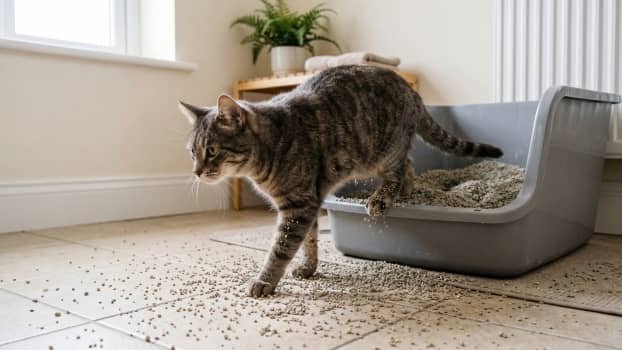
Too much litter can lead to tracking and mess as cats push litter out of the box.
Using too little litter is one of the fastest ways to make a litter box smell and become harder to clean.
When the layer is too thin, urine reaches the bottom of the box before it can form a proper clump. This creates a sticky layer that clings to the surface and often needs to be scraped off. Even after cleaning, the smell tends to linger because the base of the box stays damp longer.
It also makes it harder for your cat to cover waste. Instead of burying it, they may end up pushing litter around without fully covering anything. That is when odor becomes noticeable much sooner.
Some cats react to this right away. If they keep hitting the bottom of the box while digging, they may start avoiding it or spend more time scratching at the sides instead.
A thin layer might seem like it saves litter, but it usually leads to more frequent full cleanouts and stronger odors, which ends up creating more work overall.
What Happens If You Use Too Much Litter
Adding more litter might seem like it would improve odor control, but it often creates a different set of problems.
When the layer is too deep, the surface becomes unstable. Cats can sink slightly when they step in, which makes it harder for them to find solid footing. Some respond by digging more aggressively, which leads to litter being pushed over the edges of the box.
This is usually when you start seeing litter scattered around the floor. It is not always a behavior issue. In many cases, the box is simply holding more litter than it can contain comfortably.
Too much litter also leads to waste. Clean litter gets buried under used clumps, and during full changes, a large portion of it ends up being thrown away unused. Over time, this increases how much litter you go through each week.
Instead of reducing the amount of litter to fix the mess, it usually works better to adjust the setup. If your cat tends to kick litter out, it helps to look at high sided litter boxes that are designed to contain digging without reducing the litter depth.


How Litter Depth Changes Based on Litter Type
Not all litter behaves the same once it is in the box. The right depth depends on how the material absorbs moisture and how it holds together during scooping.
Clumping litter is the most common and usually works best at around 2 to 3 inches. This gives enough space for urine to form solid clumps before reaching the bottom. If the layer is too thin, clumps tend to break apart or stick.
Crystal litter works differently. Instead of forming clumps, it absorbs moisture and allows it to evaporate over time. Because of that, a thinner layer of about 1.5 to 2 inches is usually enough. Adding more does not improve performance and can actually make it less effective.
Pellet litter, such as pine or wood, breaks down into sawdust when wet. A deep layer fills up quickly and becomes harder to manage. Keeping it closer to 1 to 2 inches makes it easier to maintain and prevents the box from becoming overloaded.
Natural clumping options like corn, wheat, or tofu behave more like clay litter. They typically work best in the same 2 to 3 inch range, although lighter formulas may need small adjustments depending on how well they hold their shape.
| Litter Type | Recommended Depth | How It Behaves in the Box |
|---|---|---|
| Clumping Clay | 2 to 3 inches (up to 4 for heavy use) | Forms solid clumps and needs enough depth to keep urine from reaching the bottom. |
| Crystal (Silica) | 1.5 to 2 inches | Absorbs moisture instead of clumping, so a thinner layer works better. |
| Wood or Pine Pellets | 1 to 2 inches | Breaks down into sawdust when wet, so too much fills the box quickly. |
| Corn, Wheat, or Tofu | 2 to 3 inches | Clumps similarly to clay but is lighter, so depth helps maintain structure. |
Choosing the Right Litter for the Right Depth
Once you know the right depth, the type of litter you use starts to matter a lot more. Some formulas hold their shape better, while others rely on absorption instead of clumping.
Clumping clay litter is usually the easiest to manage at the 2 to 3 inch range. A stronger formula forms solid clumps that do not fall apart when you scoop, which helps keep the box cleaner over time. One example is Dr. Elsey’s Ultra Unscented Clumping Clay Cat Litter, which is known for forming firm clumps and controlling odor without relying on added fragrance.
Crystal litter works differently. Instead of forming clumps, it absorbs moisture and allows it to evaporate over time. Because of that, a thinner layer of about 1.5 to 2 inches is usually enough. One example is PetSafe ScoopFree Premium Crystal Cat Litter, which is designed to absorb moisture quickly and control odor without needing a deep layer.
Pellet litter, such as pine or wood, breaks down into sawdust when wet. A deep layer fills up quickly and becomes harder to manage. Keeping it closer to 1 to 2 inches makes it easier to maintain and prevents the box from becoming overloaded. One example is Nature’s Logic 100% Natural Pine Pellet Cat Litter which breaks down cleanly and works well in setups where you want a simpler, low tracking option.
Natural clumping options like corn, wheat, or tofu behave more like clay litter. They typically work best in the same 2 to 3 inch range, although lighter formulas may need small adjustments depending on how well they hold their shape. One example is World’s Best Cat Litter Multiple Cat Unscented, which forms solid clumps while staying lighter than traditional clay.
The key is to match the litter to the depth and setup you are using. When the two work together, the box stays cleaner, clumps are easier to remove, and you end up using less litter overall.
4 Factors That Change How Much Litter You Need
The 2 to 3 inch range works in most situations, but small adjustments can make a big difference depending on your setup.
Your Cat’s Digging Habits
Some cats barely scratch the surface, while others dig aggressively and push litter around the box.
If your cat tends to dig deep or kick litter out, a slightly deeper layer helps maintain coverage after they move things around. If they are more gentle, staying closer to the lower end usually works fine.
Age and Size of Your Cat
Kittens and smaller cats do better with a slightly shallower layer. It is easier for them to move around and cover waste without struggling.
Larger cats often need more depth. With a shallow layer, they are more likely to hit the bottom of the box, which can lead to odor and cleanup issues.
Type and Size of the Litter Box
A small or shallow box limits how much litter you can use comfortably. Even if 3 inches is ideal, the box may not be able to contain it without creating a mess.
In that case, the issue is usually the box, not the depth. A larger or high sided box makes it easier to keep the right amount of litter without constant spillover. You can see a few good options in this guide to high sided litter boxes.
Self cleaning boxes are different. Most have a marked fill line, and going above that can affect how the system works.
Multi Cat Households
When more than one cat uses the same box, the litter breaks down faster and gets moved around more.
Keeping the depth closer to 3 to 4 inches helps maintain coverage between cleanings and reduces odor buildup. It also helps prevent the box from wearing down too quickly between scoops.
If you are dealing with multiple cats, it also helps to review your overall setup. A proper multi cat litter box setup can reduce stress on each box and make maintenance easier.
How to Maintain the Right Litter Level
Getting the depth right is only part of the setup. Keeping it consistent is what makes the litter box easier to manage day to day.
Every time you scoop, you are removing part of the litter along with the waste. Over a few days, that slowly reduces the depth, even if the box still looks full at a glance.
A simple way to keep things consistent is to top off the litter regularly. Adding a small amount every few days helps maintain that 2 to 3 inch range without needing a full refill.
If the level drops too low, the same problems start to come back. Clumps stick, odor builds faster, and your cat may start digging more than usual.
Full changes are still important, but they do not need to happen as often if you keep the depth consistent. For most setups, a full clean every couple of weeks works well, depending on the type of litter and how many cats are using the box.
Keeping the level steady also helps control how much litter you use over time. Instead of dumping and refilling too often, you are maintaining a stable base and only replacing what is removed.
Practical Setup Tips That Make This Easier
A few small adjustments can make a big difference in how well the litter box works day to day.
If litter keeps getting pushed out of the box, the issue is usually not the depth. A box with higher sides gives your cat room to dig without sending litter onto the floor. This is especially helpful if you are trying to maintain a full 2 to 3 inch layer.
If tracking is the main problem, adding a litter mat near the entrance helps catch loose pieces before they spread around the house. This lets you keep the proper depth without lowering the amount just to control mess.
If clumps are breaking apart or sticking, the litter itself can be part of the problem. A good clumping formula holds together better and makes it easier to scoop cleanly at the right depth.
Placement also matters. If the box is in a tight or awkward space, cats may rush or dig differently, which can affect how litter is moved around. Giving the box a bit more open space can reduce mess without changing anything else.
For more ways to reduce mess around the box, it helps to look at a full guide on litter tracking problems and how to control them.
Frequently Asked Questions
How many pounds of litter is 2 to 3 inches?
For a standard size litter box, 2 to 3 inches usually equals around 15 to 20 pounds of litter. The exact amount depends on the size of the box, so it is easier to judge by depth rather than weight.
Do cats prefer deep or shallow litter?
Most cats prefer a moderate depth where they can dig and cover waste without sinking. Around 2 to 3 inches gives them enough litter to work with while still feeling stable under their paws.
Why does my cat dig all the litter to one side?
This usually happens when your cat is trying to create a deeper area to dig in. It can also happen if the box is too small or the litter level is uneven. Keeping the depth consistent across the box helps reduce this behavior.
Should kittens use the same litter depth?
Kittens do better with a slightly shallower layer, usually around 1.5 to 2 inches. It makes it easier for them to move around and learn how to use the box without struggling to dig.
How often should I add more litter?
Adding a small amount every few days helps maintain the right depth. If you scoop daily, topping off regularly keeps the level consistent and prevents it from becoming too shallow over time.
Final Thoughts
Getting the right amount of litter in the box makes a bigger difference than it seems at first.
Around 2 to 3 inches works well for most setups, but the best results come from adjusting based on your cat, the type of litter you use, and how the box is set up. Once the depth is right and stays consistent, odor is easier to manage, clumps are easier to remove, and the entire setup becomes more predictable.
If you are still dealing with mess or smell, the issue is usually not just the litter itself. The box design, litter type, and daily routine all play a role. Small adjustments in each area tend to fix most problems without needing to completely change your setup.