
Disclaimer: This post may contain affiliate links. As an Amazon Associate, we earn from qualifying purchases.
How many litter boxes per cat?
The usual answer is simple. One litter box per cat, plus one extra. So one cat needs two boxes. Two cats need three.
That rule works in a lot of situations. But it does not explain why problems still happen.
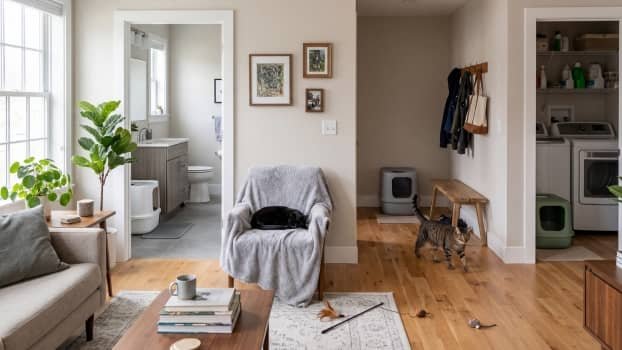
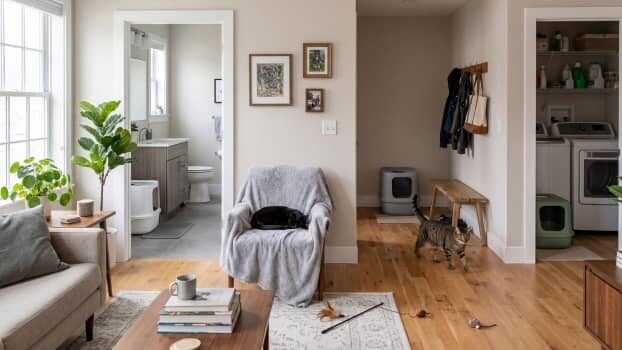
Litter boxes placed in separate areas give cats better access and reduce conflict
A home can have the “right” number of litter boxes and still deal with accidents, one cat avoiding the box, or tension between cats. The issue usually comes down to how those boxes are set up and how cats actually use them.
This guide breaks it down in a practical way. You will learn how many litter boxes per cat, when the rule needs to be adjusted, and how to set things up so your cat actually uses the box instead of avoiding it.
So, How Many Litter Boxes Per Cat Do You Actually Need?
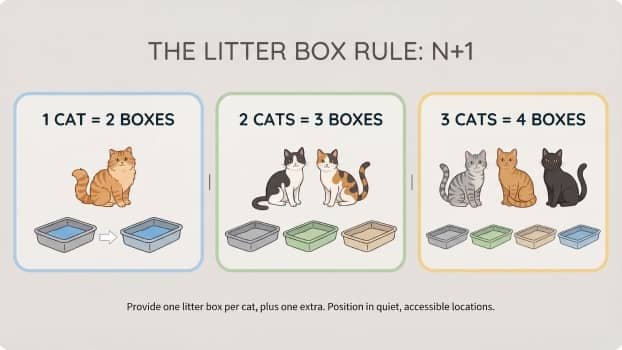
The standard rule is one litter box per cat plus one extra for better access and fewer problems
Cats need one litter box per cat, plus one extra.
That means:
- One cat needs two litter boxes
- Two cats need three litter boxes
- Three cats need four litter boxes
This is often called the “n plus one” rule, and it is the standard recommendation used by vets and behaviorists.
The extra box gives your cat options. It helps prevent situations where one box is dirty, blocked, or avoided for any reason. It also reduces tension in multi cat homes, where one cat may not feel comfortable using the same space as another.
Just as important, these boxes should not all be in the same spot. Putting them side by side can defeat the purpose, since cats may treat them like a single shared area instead of separate options.
Why Cats Need More Than One Litter Box
The extra litter box is not just a backup. It solves a few very real problems that show up in most homes.
Cats are careful about where they go to the bathroom. It is a vulnerable moment, and they want a space that feels safe and easy to access. If something feels off, they will avoid the box completely.
One common issue is access. In a home with more than one cat, one cat can quietly control a litter box just by sitting nearby or passing through often. The other cat may avoid that area and look for a different place to go.
Cleanliness is another factor. A litter box that has already been used may not be acceptable to your cat, especially if it has not been scooped yet. Having another option nearby makes a big difference.
Some cats also prefer separation. They may use one box for urination and another for solid waste. Without that option, they may start avoiding the box altogether.
The extra litter box gives your cat flexibility. It reduces stress, prevents conflict, and makes it much more likely that your cat will keep using the box instead of finding somewhere else.
Why Putting Litter Boxes in the Same Place Does Not Work
It is easy to assume that having multiple litter boxes in one spot solves the problem. In reality, it often does not.
When litter boxes are placed side by side, cats tend to treat them as one shared area instead of separate options. From their perspective, it feels like a single location. If that area feels unsafe or uncomfortable, they may avoid all of the boxes there.
This becomes a bigger issue in multi cat homes. One cat can control access just by being nearby. The other cat may not feel comfortable walking past or using the same space, even if there are multiple boxes available.
Location also affects escape routes. Cats prefer using a litter box where they can leave easily if needed. A tight corner, hallway, or busy room can make the space feel risky. Adding more boxes in that same spot does not fix the problem.
Spreading litter boxes out creates real choices. One in a quiet corner, another in a different room, and one on another level of the home if possible. This setup gives each cat a better chance to find a space that feels safe and accessible.
What Happens If You Do Not Have Enough Litter Boxes
You will usually start seeing problems pretty quickly if there are not enough litter boxes. They often look like behavior issues when they are really setup problems.
One of the most common signs is going outside the box. A cat may start using the floor, a corner, or even a bed because the litter box does not feel like a safe or available option.
In multi cat homes, tension can build quietly. One cat may avoid the litter box completely if another cat is nearby too often. This does not always look like fighting. It can be subtle avoidance that leads to accidents elsewhere.
Overused litter boxes also become a problem. When a single box fills up quickly, it becomes less appealing. Even if you scoop regularly, some cats will still avoid a box that feels too used.
Stress plays a role too. When a cat cannot comfortably access a litter box, it can lead to ongoing anxiety around bathroom habits. That stress can show up as inconsistent use, hesitation, or sudden changes in behavior.
Adding another litter box is often the simplest fix. It gives your cat another option and removes pressure from a single shared space.
When the Rule Changes
The one box per cat plus one extra rule is a strong starting point. But in real life, that is not always the case.
In smaller spaces, fitting multiple litter boxes can be difficult. Instead of forcing too many boxes into one area, it often works better to spread out what you can and focus on cleanliness. Scooping more often and using a larger box can help reduce pressure on a limited setup.
With a single cat, one litter box can sometimes work. But having a second box in a different spot often prevents issues before they start. If one box becomes dirty or less appealing, the second option keeps your cat from looking elsewhere.
In homes with cats that get along well, you might see them sharing without obvious problems. Even then, having an extra box reduces the chance of conflict later. Behavior can change over time, especially with age or stress.
Multi-level homes need a different approach. At least one litter box per floor makes a big difference. Cats do not always want to travel far, especially older cats or those with mobility issues.
This is also where the type of litter box starts to matter. In tighter spaces or multi cat homes, a larger litter box or a high sided design can make sharing easier and reduce mess. You can see examples of these setups with extra large litter boxes that give cats more room and help contain litter.
The goal is not just to follow the rule exactly. It is to give your cat consistent, easy access to a space that feels safe and usable.
If space is limited or your cats need more room, choosing the right size box becomes even more important. This guide on best extra large litter boxes for big cats explains what to look for and which options work well.
Real Setup Examples for 1, 2, and 3 Cats
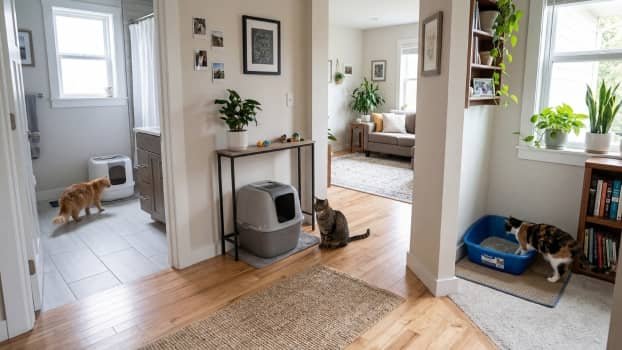
Separating litter boxes across different areas helps prevent conflict and improves access
These examples show how the rule actually looks in a home. The goal is not perfection. It is making the setup work in a way your cats will use.
One Cat
A single cat still benefits from two litter boxes.
One box usually goes in a quiet, low traffic spot like a bathroom, laundry area, or a tucked away corner. The second box should be in a different area of the home so your cat has another option if the first one is busy or already used.
In smaller spaces, this might mean placing the second box a short distance away rather than in a completely separate room. Even a bit of separation helps, as long as both boxes are easy to reach.
The goal is not to put a litter box in the middle of your living space. It is to avoid having both boxes in the exact same spot.
Two Cats
Two cats need three litter boxes, but where you put them matters just as much as the number.
A better setup is to spread them across different parts of the home. For example, one in a bathroom, one in a laundry area, and one in another quiet corner. The goal is to avoid putting all three in the same room.
If the boxes are grouped together, one cat can still control access to that entire area. The other cat may avoid it, even if there are multiple boxes available.
If one cat tends to be more dominant or follows the other, spacing becomes even more important. Each cat should have access to at least one litter box without needing to pass closely by the other.
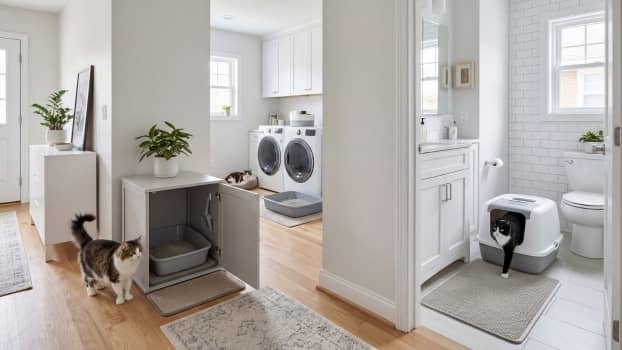
Using multiple litter boxes in different areas helps reduce conflict and improves access for cats
Three Cats
With three cats, you are looking at four litter boxes, and placement becomes even more important.
At this point, it helps to think in zones instead of just adding more boxes. Spread them across the home so no single area becomes a bottleneck. Quiet, low traffic spots work best, where a cat can use the box and leave easily.
In multi-level homes, at least one litter box per floor makes a big difference. Cats will not always travel far, especially if another cat is nearby or the path feels crowded.
Larger litter boxes can also help in this setup. When multiple cats share space, a bigger box gives them more room and makes daily use easier without feeling cramped.
If you are setting up for three cats, this guide on how many litter boxes for 3 cats breaks down the exact setup and placement in more detail.
Common Mistakes That Cause Litter Box Problems
Even with the right number of litter boxes, a few setup mistakes can still lead to problems.
Putting All Litter Boxes in One Spot
This is one of the most common issues.
Keeping all litter boxes in the same room might feel convenient, but it removes the benefit of having multiple options. Cats often treat that setup as one shared area. If that space feels uncomfortable or blocked, they may avoid all of the boxes.
Not Cleaning Often Enough
A litter box that is already used can quickly become unappealing.
In homes with more than one cat, a single box can fill up fast. If it is not scooped often enough, cats may start looking for a cleaner place to go.
More boxes help, but regular cleaning still matters just as much.
Using a Box That Is Too Small
A litter box that feels too small can make a cat hesitant to use it properly.
Cats need enough room to turn around, dig, and cover without feeling cramped. When the space is tight, they may rush, step out before finishing, or avoid the box altogether.
You might notice litter getting kicked out more often, or your cat standing half in and half out of the box. Those are signs the space is not comfortable.
This becomes more noticeable in multi cat homes. When more than one cat uses the same box, a larger size gives them enough room to use it without feeling restricted or rushed.
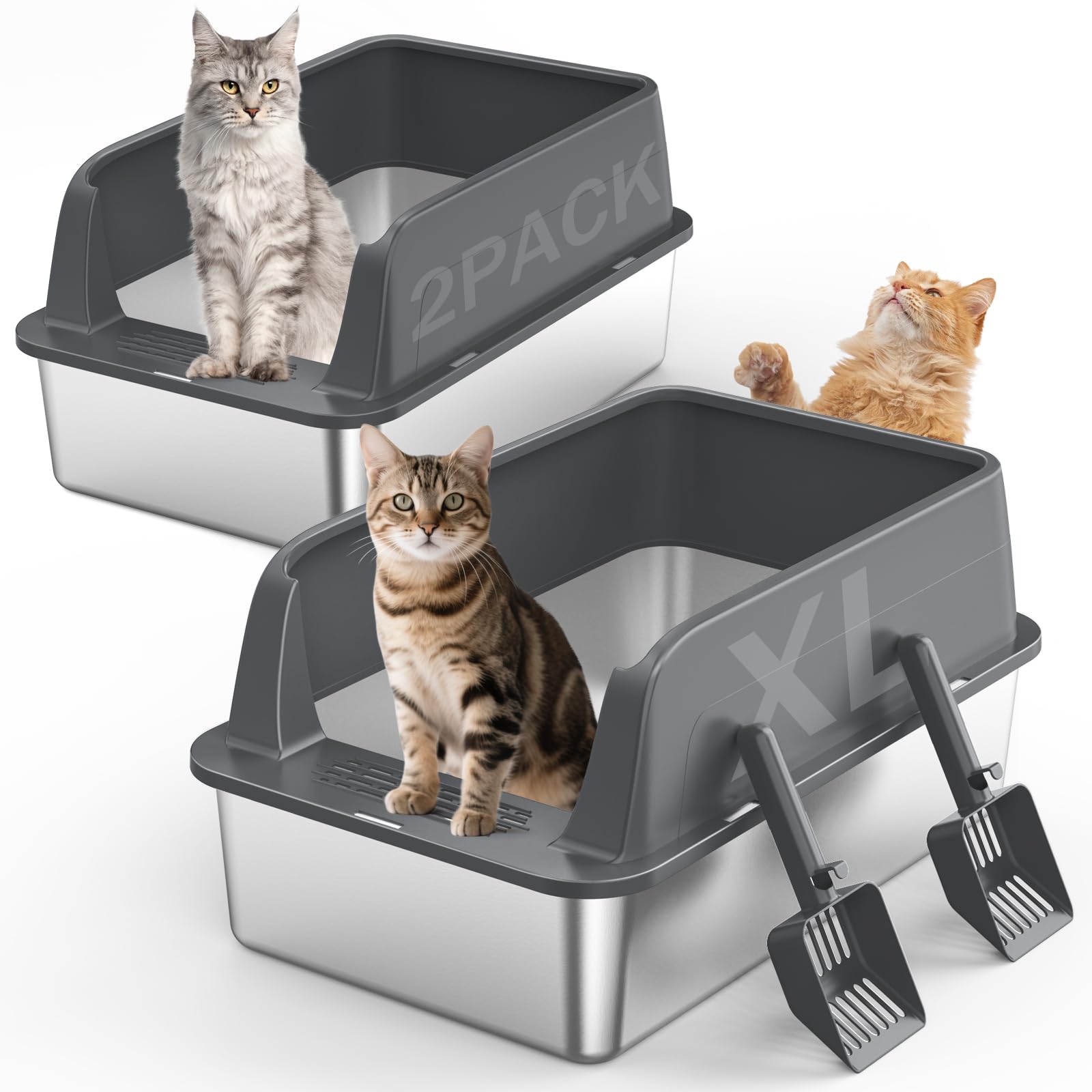
If space allows, switching to a larger litter box setup can make a noticeable difference. Some people use two packs of extra large litter boxes to create separate, comfortable spaces for each cat without crowding a single area. This kind of setup works especially well in multi cat homes where sharing one smaller box tends to cause problems.
Placing Boxes in Busy or Noisy Areas
A litter box placed near loud appliances, high traffic areas, or constant movement can feel unsafe.
Cats prefer quiet spots where they can use the box without being disturbed. If the location feels stressful, they may choose a different area entirely.
Expecting Cats to Share Without Issues
Some cats tolerate sharing. Others do not.
Even if there are no obvious signs of conflict, one cat may still avoid a box that another cat uses frequently. This can lead to subtle problems that build over time.
Having enough boxes in separate areas reduces this pressure and makes the setup more reliable.
Do Self Cleaning Litter Boxes Change the Rule
This is what a high capacity automatic litter box setup looks like:
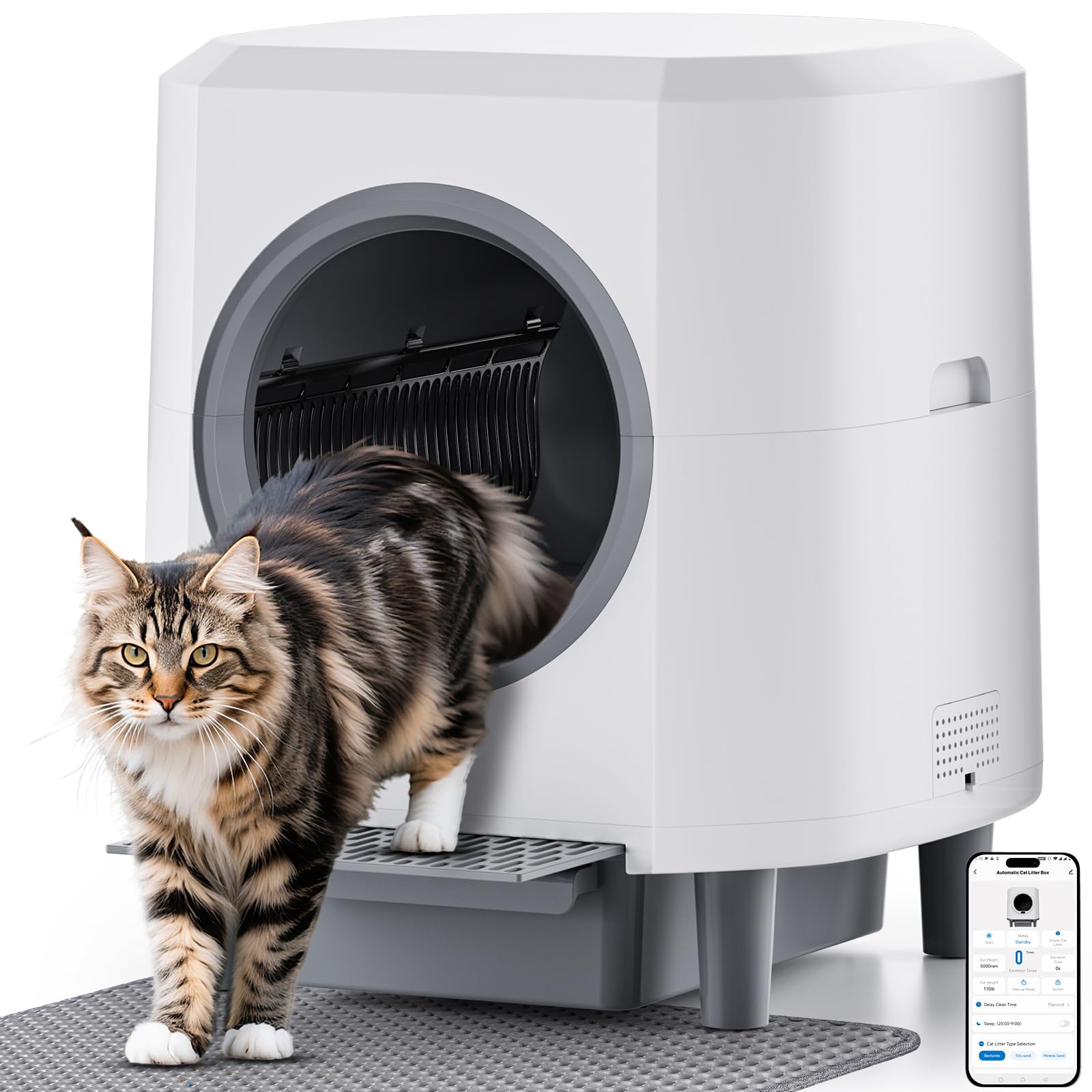
Self cleaning litter boxes can help with maintenance, but they do not replace the need for multiple boxes.
These boxes keep the litter cleaner by removing waste automatically. That can make a single box last longer without becoming unpleasant. In some cases, this can make fewer boxes work better than a traditional setup.
But the main issue is not just cleanliness. It is also access and comfort.
In a home with more than one cat, a self cleaning litter box can still be avoided if one cat spends too much time near it. The same problems with blocking and hesitation can still happen, even if the box is clean.
Some cats are also cautious around automatic boxes. The noise or movement can make them hesitant to use it, especially at first. Having another regular litter box nearby gives them a more comfortable option.
A large capacity automatic litter box like this one can help reduce daily cleaning, especially in multi cat homes where one box gets used more often.
In practice, a self cleaning litter box works best as part of a setup, not as a complete replacement. It can reduce daily cleaning and handle more use, but it does not solve spacing or behavior issues on its own.
If you are using one, it often makes sense to keep at least one additional litter box in a different area so your cat always has a second option.
See automatic litter boxes designed for multiple cats
FAQ
Can two cats share one litter box?
Two cats can share one litter box, but it often leads to problems over time.
One cat may start avoiding the box if it feels crowded or if the other cat uses it frequently. This can lead to accidents outside the box, even if both cats seemed fine at first.
Adding another litter box usually fixes this quickly by giving each cat a separate option.
Do I really need two litter boxes for one cat?
One litter box can work fine for a single cat, but having two often prevents issues.
If one box is dirty or in use, the second gives your cat another option. This can help avoid accidents and makes the setup more reliable long term.
Where should litter boxes be placed?
Litter boxes should be placed in quiet, low traffic areas where your cat can use them without being disturbed.
Avoid placing all boxes in the same room. Spreading them out gives your cat real options and reduces the chance of avoidance or conflict.
Do self cleaning litter boxes replace multiple boxes?
Self cleaning litter boxes help keep things clean, but they do not replace the need for multiple boxes.
They reduce maintenance, but they do not solve issues like access, territory, or comfort. Most setups still work better with more than one box, even if one is automatic.
What if I do not have space for multiple litter boxes?
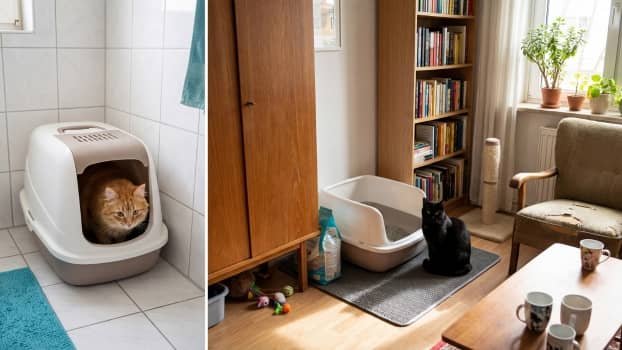
Even in small spaces, placing litter boxes in separate areas gives cats better access
In smaller spaces, focus on separation and cleanliness.
Place boxes as far apart as possible, even if it is just different corners or areas. Scooping more often and using a larger litter box can help make a limited setup work better.
Final Thoughts
Getting the number of litter boxes right is a good starting point, but it is only part of the setup.
Cats care just as much about where the box is placed, how clean it is, and whether they feel comfortable using it. A home can have the right number of boxes and still run into problems if those details are off.
Small changes often make a big difference. Spreading boxes out, adding one extra, or switching to a larger or easier to maintain setup can solve issues that seem much bigger at first.
The goal is simple. Give your cat a space that feels safe, easy to access, and comfortable to use every time.