
Disclaimer: This post may contain affiliate links. As an Amazon Associate, we earn from qualifying purchases.
When you start wondering how many litter boxes for 3 cats, it is usually because something is not working anymore.
Things might have been fine for a while, then something changes. A smell that keeps coming back. A spot just outside the box. One cat hanging around while the others hesitate or stop using it altogether.
The usual advice is simple. Three cats need four litter boxes. That part makes sense, but it does not help much when you are trying to figure out where those boxes are supposed to go in a normal living space.
Yes, three cats should have four litter boxes. But if you cannot fit four, there are still ways to set things up so you can minimize accidents, reduce tension, and keep things under control.
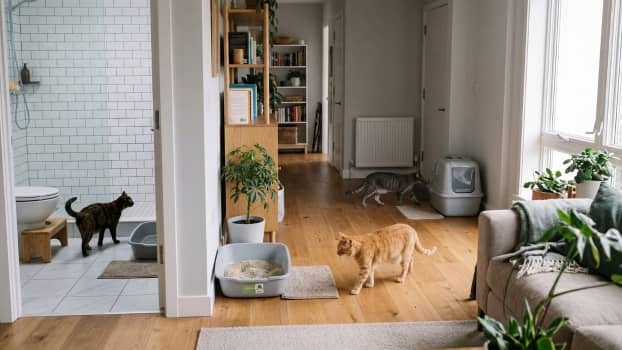
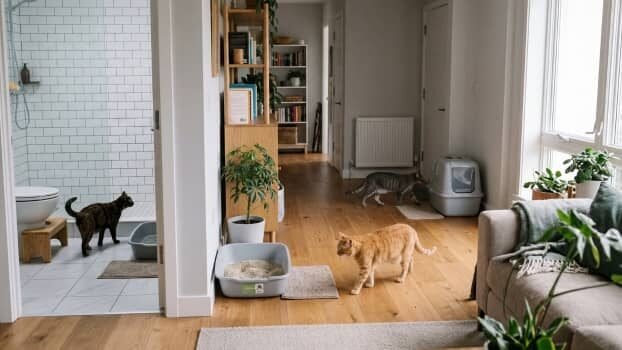
Litter boxes placed in separate areas of the home make it easier for multiple cats to use them without stress or competition.
This guide walks through what actually works in real homes. You will see how to handle limited space, how to stop cats from competing over the same box, and how to build a setup that all three cats will actually use.
How Many Litter Boxes Do You Actually Need?
Three cats should have four litter boxes. If you are trying to figure out how many litter boxes for 3 cats will actually work in your space, this is the baseline to start from. This follows the “one per cat, plus one extra” rule, which helps reduce competition and keeps each box cleaner.
But the number alone does not tell the whole story. Four boxes placed side by side in one room often function like a single shared space, which can still lead to tension, hesitation, or accidents.
What matters just as much is how those boxes are set up. Location, spacing, and access all play a role in whether your cats actually use them.
Why the 4-Box Rule Doesn’t Always Work
The idea of four litter boxes sounds simple, but in real life, it doesn’t always work.
The most common problem is placement. When all four boxes end up in the same room, they do not function as separate options. To a cat, that setup can feel like one shared area, especially if there is only one way in and out.
That is where issues start. One cat lingers nearby, another waits, and eventually one decides to go somewhere else entirely.
Space is another problem. In a smaller home or apartment, spreading out four boxes across different areas is not always realistic. Boxes get pushed into corners, closets, or tight spots where a cat can feel trapped or cornered.
Even when you technically have enough boxes, the setup can still create tension if cats do not feel comfortable using them.
This is why the number alone is not enough. A working setup depends on how those boxes are placed, how easy they are to access, and whether each cat feels safe using them.
The Real Problem Is Access, Not Just the Number
Having four litter boxes does not help much if one cat cannot comfortably use them.
In a multi-cat home, access is what really determines whether a setup works. A litter box might be clean and technically available, but if another cat is nearby, blocking the path, or watching too closely, it can be enough to make a cat avoid it.
This is where subtle behavior starts to matter.
Some cats wait until the area is completely clear. Others will stop using a box entirely if they feel watched or cornered. Over time, that hesitation turns into accidents in quieter, safer spots around the house.
Entry and exit also play a role. If a litter box is tucked into a corner, inside a closet, or at the end of a narrow hallway, a cat can feel trapped. In a three-cat setup, that risk is higher because there is always a chance another cat shows up at the wrong moment.
This is why placement matters just as much as quantity. Each box needs to feel easy to approach, easy to leave, and free from pressure from the other cats.
The Litter Station Trap
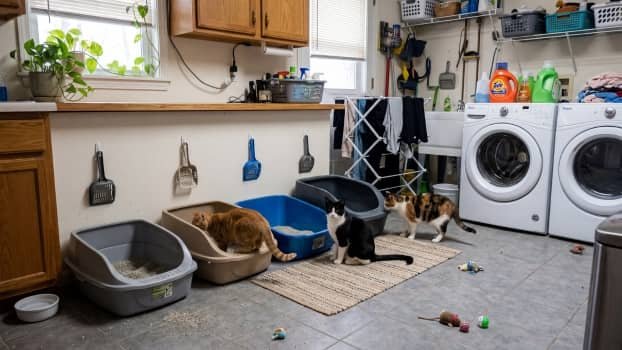
Placing multiple litter boxes side by side may seem convenient, but it often creates one shared space instead of separate options for each cat.
It is common to place multiple litter boxes side by side to save space.
On paper, this checks the box. Four litter boxes in one spot should meet the rule.
In reality, this setup often behaves like a single shared box.
What matters is not just how many boxes you have, but how many separate locations your cats can choose from. When all the boxes are in one area, that entire space becomes one option.
If that area feels busy, exposed, or hard to access, every box in that spot becomes less usable.
This is why spreading boxes across different parts of the home makes such a difference. Even moving one box to a quieter area can change how your cats use the entire setup.
What to Do If You Can’t Fit 4 Litter Boxes
If you are trying to figure out how many litter boxes for 3 cats will work in a smaller space, this is where things need to be adjusted.
Not every home has space for four separate litter box locations. That does not mean your setup cannot work. It just means you need to be more intentional with how you use the space you have.
Start by focusing on separation, even if you have fewer boxes. Two or three boxes placed in different areas of the home will work better than four boxes lined up in one spot. Even small distance helps create a sense of choice.
Next is size. When you cannot increase the number of boxes, increasing the size makes a noticeable difference. Larger boxes give each cat more room and reduce how quickly things feel dirty. This is where extra-large or high-sided boxes can help support a shared setup.
Cleaning frequency becomes more important as well. If odor is becoming harder to manage with fewer boxes, this guide on litter box odor solutions can help you keep things under control.
With three cats using fewer boxes, waste builds up quickly. Scooping more often keeps the boxes usable and prevents one cat from rejecting it because it feels too full.
Placement still matters just as much here. Avoid tight corners, closets, or areas where a cat can feel boxed in. Open, easy-to-access spots tend to work better, especially in multi-cat homes where movement and visibility matter.
If tension between cats is part of the problem, separating boxes into different “zones” can help reduce that pressure. Even in a smaller space, placing boxes in different rooms or distinct areas can make them feel like separate options.
A smaller number of well-placed, well-maintained boxes will always work better than a higher number of poorly placed ones.
Real-Life Litter Box Setups That Actually Work
Every home is different, and the right setup depends on your space and how your cats behave. These examples show how to make things work even when the ideal setup is not possible.
Small Apartment Setup (1–2 Rooms)
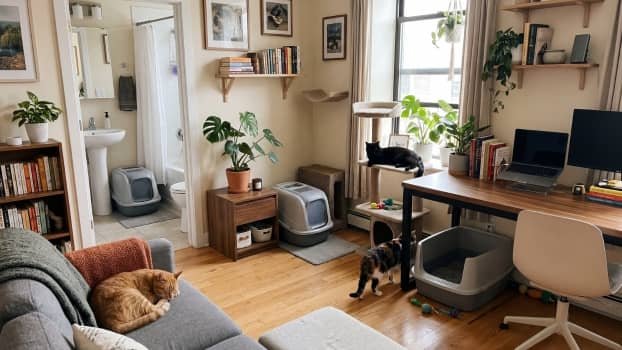
In smaller spaces, spreading litter boxes into different areas like corners, bathrooms, and near furniture helps reduce crowding and keeps them usable.
The biggest challenge here is space. There is no way to spread four boxes across separate rooms, so everything has to fit into a tighter layout.
Instead of trying to hide all the boxes in one area, break them up as much as possible. One can go in the bathroom, another near a quiet wall in the living area, and a third in a low-traffic corner.
Using larger boxes helps here. When space is limited, bigger boxes make shared use more manageable. Cleaning more often also becomes part of the routine, since waste builds up faster with three cats.
Furniture-style litter box enclosures or tucked-away spots like beside a desk can also help you fit more boxes without making the space feel crowded.
Multi-Floor Home Setup
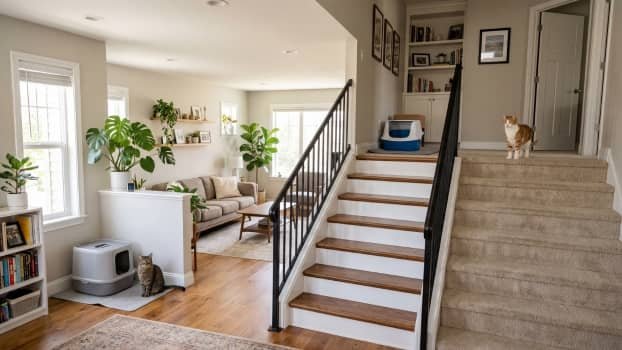
Placing at least one litter box on each level of the home makes it easier for cats to access them without conflict or hesitation.
With more space, the problem shifts from fitting boxes to placing them properly.
A good starting point is to treat each floor as its own zone. At least one litter box should be available on every level where your cats spend time. This prevents situations where a cat avoids going because it does not want to travel between floors.
It also helps reduce conflict. If one cat tends to dominate a certain area, having boxes on different levels gives the others alternative options without needing to cross paths.
Avoid putting all boxes in basements or laundry rooms. If the location feels out of the way or inconvenient, cats may look for easier options.
When One Cat Controls the Space
Sometimes the issue is not space, but behavior.
One cat may start lingering near the litter box area, even without obvious aggression. That alone can be enough to make another cat avoid using it.
In this case, open layouts work better than enclosed ones. Avoid covered boxes or tight spaces where a cat could feel trapped.
Try placing boxes along open walls instead of corners. This gives cats more than one direction to leave, which makes them more comfortable using the space.
If the problem continues, separating boxes into clearly different areas can help reduce that pressure. Even small changes in placement can make a noticeable difference.
Features That Make Multi-Cat Setups Easier
When you are living with three cats, the type of litter box you use starts to matter more. The right features can make a shared setup much easier to manage, especially if you are limited on space.
Extra-Large Litter Boxes
Standard litter boxes fill up quickly with three cats. That is when they start getting avoided, even if you are cleaning regularly.
Larger boxes give each cat more room and slow down how fast waste builds up. This makes them a better fit when multiple cats are sharing fewer boxes.
One practical option is using an extra-large litter box in a two-pack, like this stainless steel setup . The larger size makes shared use easier, and having two boxes right away helps you spread them into separate areas instead of keeping everything in one spot. Stainless steel also helps reduce lingering odor, which becomes more noticeable in multi-cat setups.

Storage bin style boxes or oversized open litter boxes are often more practical than smaller, standard models.
High-Sided Boxes
With multiple cats using the same space, litter tends to scatter more and some cats may start kicking or spraying higher than usual.
High-sided boxes help contain that mess and keep the surrounding area cleaner. This becomes especially useful in smaller homes where litter boxes are closer to living areas.
One example is a high-sided, open-top litter box like this stainless steel two-pack . The taller walls help keep litter and spray contained, while the open design still makes it easy for cats to enter and leave without feeling restricted.
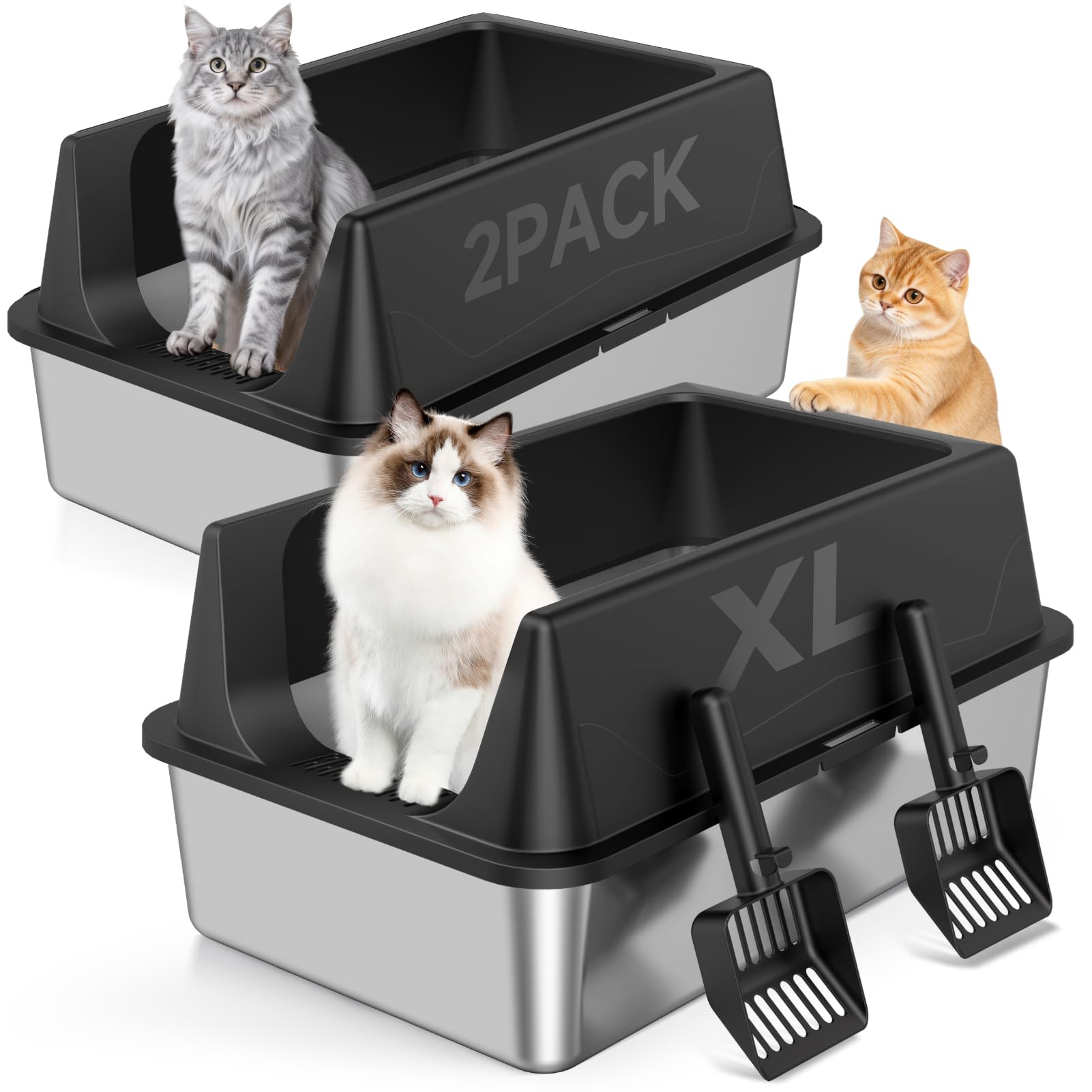
They also give a bit more separation between cats without fully enclosing the space, which makes them a better fit for multi-cat setups than covered boxes.
Open vs Covered Boxes
Covered litter boxes seem like a good idea. They hide the mess and can help contain some odor.
The problem is how they feel to a cat, especially in a multi-cat home.
An enclosed box limits visibility and creates a single entry and exit point. That can make a cat hesitate, especially if another cat is nearby or tends to linger in the area. Even a small amount of tension can be enough to make a cat avoid the box entirely.
Open boxes remove that pressure. They are easier to approach, easier to leave, and give cats a clear view of their surroundings.
In a three-cat setup, that difference matters more than it seems. A box that feels safe and accessible is far more likely to get used consistently.
Automatic Litter Boxes
Automatic litter boxes can help reduce how often you need to scoop, which becomes more noticeable with three cats.
They keep the box cleaner throughout the day, but they do not solve the bigger issues in a multi-cat setup.
Most automatic boxes are still close to a standard size. They are not significantly larger, so they do not give cats more space or reduce how quickly things fill up when multiple cats are using the same box.
An automatic box is also just one location. If access, placement, or tension between cats is the problem, it will not fix that on its own.
That said, they can work well in certain areas. In a busier part of the home, like near a kitchen or main living space, having a box that cleans itself can help manage odor and keep things more consistent throughout the day.
If you use one, it works best as a supplement rather than a replacement. Keeping a regular box nearby gives your cats another option, especially while they get used to the movement or noise.
They can make cleaning easier, but they do not replace a well-planned setup.
Simple Setup Rules That Make Everything Work
If you remember nothing else, these are the rules that make the biggest difference in a three-cat setup.
Spread boxes across different areas
Boxes placed in separate locations work better than multiple boxes in the same spot. Even small distances help reduce tension.
Avoid corners and tight spaces
A box should be easy to approach and easy to leave. Tight areas can make cats feel trapped, especially around other cats.
Do not rely on one “litter room”
Putting every box in one room creates a single shared zone. That setup often leads to hesitation and accidents.
Use larger boxes when sharing
Bigger boxes stay usable longer and give each cat more space, which helps when you cannot add more boxes.
Scoop more often than you think you need to
With three cats, boxes fill up quickly. Keeping them clean makes them more likely to be used consistently.
Pay attention to behavior changes
If a cat starts avoiding the box, hesitating, or going elsewhere, it is usually a setup issue, not random behavior.
Focus on access first, then quantity
Having enough boxes matters, but they only work if each cat feels comfortable using them.
Frequently Asked Questions
How many litter boxes for 3 cats if you only have space for two?
They can, but it often leads to problems over time. Boxes fill up quickly, and some cats may start avoiding them if they feel too dirty or crowded. If you are limited to two boxes, using larger sizes and scooping more often becomes essential.
What happens if you don’t have enough litter boxes?
You will usually start to see small signs first. A cat hesitates before entering, waits longer, or starts using other areas like rugs or corners. These are often early signals that the setup is not working.
Where should litter boxes go in a multi-cat home?
Spread them across different areas where your cats already spend time. Avoid putting them all in one room, especially spaces with only one way in and out. Open, easy-to-access spots tend to work better.
Do bigger litter boxes really make a difference?
Yes, especially when multiple cats are sharing. Larger boxes stay usable longer and give each cat more room, which helps reduce how quickly they get avoided.
Does an automatic litter box count as two boxes?
No. It still counts as one location. It can help with cleaning, but it does not replace the need for multiple boxes in different areas.
Final Thoughts
If you came here wondering how many litter boxes for 3 cats you really need, the answer is four, but how you set things up matters just as much. That part does not change.
What does change is how you make that work in real life.
Trying to follow the rule perfectly is not always possible, especially in smaller spaces. What matters more is how your setup actually functions day to day. Where the litter boxes are placed, how easy they are to access, and whether each cat feels comfortable using them.
If you can spread boxes out and give your cats clear, low-stress options, even a smaller setup can work well. If everything is crowded into one area, even four boxes can still lead to problems.
Focus on making each litter box usable, not just adding more of them.

